Tag

OpenSSF

What’s in the SOSS? Podcast #29 – S2E06 Showing Up Fully: Meet OpenSSF’s new Community Manager, Stacey Potter

By Podcast

Summary

In this special episode of What’s in the SOSS?, we welcome Stacey Potter, the new Community Manager at the Open Source Security Foundation (OpenSSF). Stacey shares her winding journey from managing operations at a vitamin company to becoming a powerful advocate and connector in the open source world. We explore her community-first mindset, her work with CNCF and Platform Engineering Day, and her passion for inclusion and authenticity. Whether you’re curious about how to get started in open source or want insight into how community shapes security, this episode is for you.

Conversation Highlights

00:00 – Welcome + Introduction
01:34 – Stacey’s Origin Story in Open Source
03:18 – Discovering Community Management at Weaveworks
04:19 – Projects and Evolution Across CNCF and Beyond
06:13 – Co-Chairing Platform Engineering Day
10:15 – Being Openly Queer in Open Source
13:38 – What Stacey Hopes to Bring to OpenSSF
16:23 – Rapid Fire Round
17:53 – Final Thoughts

Transcript

Intro music (00:00)

Stacey (00:02): “It’s given me a deep understanding and appreciation for inclusiveness and being a welcoming community – I have always felt embraced here, these spaces have empowered me to show up fully as myself”

Yesenia (00:021)
Hello and welcome to What’s in the SoSS? Open SSF’s podcast where we talk to interesting people throughout the open source ecosystem, sharing their journey, experiences and wisdom. So Yessenia, I’m one of our hosts and today we have a special announcement and introduction. I am talking to OpenSSF’s Community Manager, Stacey Potter. Welcome to the open source community. Stacey, please introduce yourself to the audience.

Stacey Potter (00:48)
Hey, everyone. Thanks, Yesenia. So I’m super happy to be here. I just joined and think this is week four that we’re recording this right now. So by the time this gets posted, I might have been here for a little bit longer. But I am the new community manager here at OpenSSF. So I am here to facilitate events. I’ll be managing budgets in the background. And in general, just promoting the foundation and all of our technical initiatives. So super stoked to be here. Can’t wait to meet everybody either in person, online, in Slack, et cetera. So super happy.

Yesenia (01:25)
Super, super happy to have you and we’ll kick it off with our first question. Tell us about your journey in the open source world and just what sparked your curiosity.

Stacey Potter (01:34)
Yeah, so honestly, my path into software was more a result of circumstance than intention. I transitioned into the industry a little bit later in my career. Before that, I was working as an operations manager at a small family-run vitamin company based out of Oakland, California. And after I left that role, I applied for an office manager position at a San Francisco startup focused on what we now call Software Composition Analysis or SCA. Though I don’t even know if it was called that back then in 2009. And at the time, our tagline was something like open source software security for enterprises or something like that. I think a lot of people will know our main competitor, which was Black Duck Software. But we were just a tiny little startup having fun in San Francisco.

And that role was really like my first exposure to the world of open source, but not in a really direct way because I wasn’t working with it. And I almost felt like we were kind of pulling open source out of enterprises or making it more restrictive in certain ways. Cause it was like we were bringing to light all the open source licenses and if you should or shouldn’t use them in an enterprise, right? So it felt a little ambiguous, right?

But I spent seven years there working with the CEO and gradually kind of moved through different roles at that company. I was great about working at a startup. I was the sales operations manager. And then later I transitioned into marketing. And then that company got acquired and I stayed on for a couple more years doing marketing things. And then I transitioned out of there in 2019 and went to Weaveworks where I feel like my true journey with open source really began. I started working at Weaveworks and as a community manager at that point, transition from marketing went into community management. Thanks to general good faith in my boss at the time, which was Tama Nakahara. She’s amazing and an amazing mentor. And she was like, I have marketing, you’re fine. You’re personable. You’ll be great as a community manager and really took me under her wing and taught me everything I needed to know. And learning all about Flux and Flagger in that CNCF ecosystem and really being embraced within those communities was where I feel like it really truly began.

Yesenia (04:09)
Nice. It’s nice little journey to start and then just what brought you here now to OpenSSF? Did you come from there or have you explored other open source projects that you would like to mention?

Stacey Potter (04:19)
Yeah. So Flux and Flyer were my true introduction. Been in and around the CNCF for a while. After Weaveworks, I went to Dynatrace and worked on the Open Feature project and the Kept project, which are both CNCF projects as well. Super great communities there as well. And then after Dynatrace, I went to Stacklok, which is another startup. And they had a project called Minder, which we donated to the OpenSSF. And I had kind of heard musings of the OpenSSF when I was kind of in that CNCF ecosystem before, but didn’t really know a whole lot about it. And when I worked at StackLock, kind of became more familiar with the community. We donated that project. I went through the entire process of like what donating a project looks like within the OpenSSF ecosystem. So that was fun and interesting.

Yesenia (05:11)
Interesting.

Stacey Potter (05:18)
And yeah, that’s StackLock like switched positions. It kind of is going a different route now. And so I came to OpenSSF just almost a month ago, not quite a month ago, so three weeks ago now. And yeah, that’s how I got here.

Yesenia (05:31)
That’s amazing. Here you are. Perfect. Yeah, it sounds like a good experience exposure with community building and open source projects for CNCF and OpenSSF, which are big, big organizations when it comes to open source. So very interesting, very interesting indeed. So we’ll move on to the next question. This is during my online recon, we’ll say, consented recon. I discovered you are the co-chair of Platform Engineering Day. Can you share with the audience what this is, what the event is, and what excites you the most about working with this community?

Stacey Potter (06:13)
Yeah, absolutely. So Platform Engineering Day, mean, well, as internal developer platforms, IDPs, really help dev teams move faster by giving them tools and frameworks that they need, right? So Platform Engineering Day is all about sharing real world tips on building great internal platforms, not just the tech, but the people and the processes as well, right? So it’s a chance for platform folks from all different job titles and job roles to trade stories, lessons, and ideas on making the dev experience awesome. So what excites me about working in this community? I think there’s just so many passionate people involved in this space. I know Platform Engineering Day has become kind of this buzzy word of late, right?

Yesenia (07:11)
Marketing.

Stacey (07:13)
Exactly. But I mean, to the people who are in it, they, from my perspective, as I’ve gotten involved in it, they’re super passionate folks, right? And they really want to make this experience, you know, as good as they can. But after chatting with Paula Kennedy, who is my co chair, and Abby Bangser, whom I got to know through an old Weavework’s colleague, we felt the need for not just a bunch of tech talks on the topic. But really, we wanted to provide, as I said before, a place where platform engineers, product managers, solutions architects, and other folks could come together and share lessons learned in building and managing internal platforms, measuring platform maturity and improving these golden paths and the developer experience as a whole.

Yesenia (08:04)
Nice, do you want to do a quick plug on when the next platform engineering day is?

Stacey Potter (08:08)
Well, it’s a colo with KubeCons. So if you’re going to the next KubeCon, which I believe is North America in Atlanta, Georgia, for all those folks who are outside of the States, I’m sorry, that you may or may not be able to come here based on a number of different things. But we’re trying to do it co-located in general with KubeCons, because it kind of fits there and makes sense. And we’ve had a great response so far, right? The first one, we got more CFPs than any other co-located event had ever gotten at any KubeCon, colo event before. And I think we had hundreds and hundreds of folks in the seats listening to all these great talks. And I’ll also just highlight the platform’s working group within the CNCF too. This is a great team of people working on all things platform related. And if you’re interested in learning more about platform engineering in general, the platforms working group within the CNC app is really a great place to go.

Yesenia (09:15)
Yeah, I didn’t know that it was in KubeCon. I’m hoping to go my first year this year in Atlanta.

Stacey Potter (09:21)
Yeah. Yeah. I think Paris was our debut. Yeah. Yeah. Right. Not bad. And we just had our last one in London. Yeah.

Yesenia (09:24)
Hmm, that’s a good debut. Fashion debuted there. there you go.

Stacey Potter (9:31)
We’re so fashionable. Who knew?

Yesenia (09:36)
Talking about fashionable. During my cyber roots, I found your GitHub profile, which I loved and made me giggle and smile in several locations. But you noted you’re queer and for recording purposes, AF. I’d love to hear your perspective on how this has transformed your journey and influenced you being involved in these open source communities and anything you want to share with the audience.

Stacey Potter (10:15)
Sure. So being openly queer in tech and the open source space has been a pretty powerful part of my journey, I guess, in retrospect. It’s given me a deep understanding and appreciation for inclusiveness and being a welcoming community, regardless of what the, I guess, we’re going to call it difference is for whomever is coming into your community.

I think something I’ve been lucky to experience in the Kubernetes and cloud native and broader open source ecosystems is that welcomeness, that feeling of belonging. I’ve never felt like I didn’t belong here, right?

Yesenia (10:45)
Yeah.

Stacey Potter (10:48)
Which I think is pretty special. I mean, it’s a privileged place to be, I think in certain ways too, right? Like I am a cis white woman, right? But I present as butch and I’m you know, that’s my that’s what I call myself, right? That’s how I identify. And some people could be put off by that. But I have always felt embraced here. And, you know, like these spaces have empowered me to show up fully as myself, which has not only boosted my confidence, but also allowed me to connect with and, you know, mentor, I guess, others navigating similar paths, whether that’s being queer or being a woman or whatever.

I think visibility matters and I found that authenticity can be a bridge, right? Whether it’s in a code review, which I don’t do by the way, community calls or just, you know, contributing to projects that reflect shared values that you have, right?

Yesenia (11:48)
Yeah, it’s great because that’s the underlying foundation of open source. It’s just a community of anyone that can come in and contribute and make a project, move a project and make it successful and gave me a little bit of goosebumps there as you were speaking on that one. But because I feel the same when it comes to like the open source space is just they’re very welcoming. Every time folks are like, I’m just so scared. I’m like, trust me, don’t just go ask the questions. Like this is the place to ask the technical quote unquote “this is a dumb question…”

Stacey Potter (12:15)
Yeah, and I mean, they’re just so happy. What I have found is everyone in these communities is just so happy for people to notice them to want to get involved in the first place, right? Like they’re so stoked that you’re there. Like whatever your skill set is, they’re willing to bring you into the fold, right? They’ll make it work.

Yesenia (12:22)
Yeah.

Yesenia (12:41)
We’ll figure it out.

Stacey Potter (12:41)
You don’t need to know how to code, right? Work on docs, work on…community management, promote our events, like make us a poster or a cool logo or I mean, there’s so many different ways you can contribute if you don’t write code. I don’t write code and this is my job now. I would have never thought, right? Yeah.

Yesenia (13:00)
Yeah. Who would have thunk it? Yeah, I haven’t written code in such a long time. I write for my own like fun, so I don’t lose the skill. You know, it’s like riding a bike. I’m hoping it’s like riding a bike that you never forget, but I forgot because once again, short term memory issues.

Stacey Potter (13:12)
Yeah, right, right.

Yesenia (13:17)
Ah, this is great. Moving on to the next. You are the newest member of OpenSSF. I’m sure other folks have been hired, so I’m sorry if there’s anybody that’s newer, but as far as his recording, this is what I know. And now the Community Manager, what would you like to see in the upcoming months with the impact you plan to ripple through this ecosystem?

Stacey Potter (13:38)
Wow, that’s a big question. So as the newest member of the OpenSSF team and like you said, the community manager here, I’m really excited to help grow and connect this vibrant ecosystem. In the coming months, I think I want to focus on making it easier and more inviting for people to get involved. Whether you’re seasoned security pro or just a curious first timer, I think a lot of people don’t even know that we exist maybe – the OpenSSF. So I think just awareness in general is also something that I’d like to help promote. But know, like smoothing out the onboarding journey, launching programs like the Ambassador Initiative. I think there’s been a lot of talk internally about trying to ramp that up and get that going and supporting mentorships that help contributors thrive. I’d love to see more stories, more collaboration across projects within the OpenSSF and externally within other communities like maybe CNCF, since that’s where my prior history is, right? And more representation from folks who may not traditionally see themselves in the security space. OpenSSF already has amazing technical initiatives. My goal is to amplify the voices behind them, create inclusive pathways into our work and build bridges to other communities who share our mission. So whether it’s through meetups, events, or even just a warm welcome in Slack, I want everyone to feel like there’s a place for them here.

Yesenia (15:15)
I love it. You’re full of the goose bumps today. I love that warm welcome on Slack. You had mentioned the ambassador program. I personally haven’t heard of it. Is there any, I know you guys are just, it’s in the works. Anything you want to share about it.

Stacey Potter (15:29)
Well, it’s gonna be a top priority for me as soon as I sort of get my feet, find my feet here, right? It’s only week four. But it’s definitely a priority that we want to get this out as soon as possible. And there’s already been so much work done before I came. So it’s getting me up to speed and then, yeah, I’m just super excited. think it encourages more people to join sort of.

Yesenia (15:37)
Yeah

Stacey Potter (15:56)
Also celebrating those who have made us who we are so far as well. But then, you know, lots of people would love to become an ambassador that don’t know how to get started or things like that, right? And bringing more people into the fold.

Yesenia (16:09)
Love it, love it. Well, I look forward to seeing the announcement news and learning more about that. So for those folks listening, hopefully it’s released. Hopefully it’s in the works by the time you listen to this. All right, cool. We’re going to move over to the rapid fire. I just make noises because I don’t get, Krobe’s a fancy noise maker. So we’ll go with the flow with whatever my ADHD brain decides to do. And our first question, Disney or Pixar?

Stacey Potter (16:40)
Pixar for sure. I used to live like around the corner from Pixar, so, and I’ve always been a huge Pixar fan, but this is an acquired Pixar, so they’re one and the same now,

Yesenia (16:52)
In my heart, are they really?

Stacey Potter (16:55)
Yeah, no, in our hearts we know the truth, but Pixar, yeah.

Yesenia (17:02)
Dark or light mode?

Stacey Potter (17:05)
Dark.

Yesenia (17:06)
Dark as my soul.

Stacey Potter (17:09)
Black is the night.

Yesenia (17:11)
Cats or dogs? as she takes a sip of coffee.

Stacey Potter (17:15)
Both. I have two cats and a dog, and they’re all amazing. I love them both for very different reasons.

Yesenia (17:22)
Yeah, I can’t choose between my five, so.

Stacey Potter (17:26)
Oh wow. That’s a lot.

Yesenia (17:29)
Alright, this next question and it may cause chaos to our listeners, alright? Linux Mac or Windows?

Stacey Potter (17:38)
Well, I’m a non-coder, so, and I’m a Mac gal.

Yesenia (17:44)
Mac, there it is. Well, there you have it folks. It’s another rapid fire. Any last minute advice or thoughts for the audience you’d like to share?

Stacey Potter (17:53)
Well, I’ll do some shameless plugging of our upcoming events because I’d love to connect with you all in real life and these events are great places for our community to get together and share ideas and progress on the capabilities that make it easier to sustainably secure the open source software on which we all depend. You can find all of these listed on our website at openssf.org/events

So, we’re going to be hosting some upcoming events:

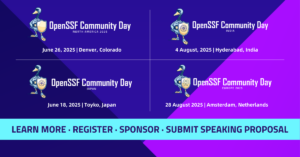
  • We’ve got Community Day Japan (in Tokyo) on June 18 – which is a colo event after KubeCon’s main event
  • CD North America will be in Denver on June 26 (as a colo event after Open Source Summit, which we are sponsoring so we’ll also have a booth at Open Source Summit)
  • CD India is August 4 in Hyderabad Co-located with KubeCon + CloudNativeCon India
  • CD Europe will be in Amsterdam on August 28 (Open Source Summit, which we are sponsoring so we’ll also have a booth at Open Source Summit)
  • And Open Source SecurityCon is November 10 (colo event pre-KubeCon NA) which is a new event that fosters collaboration and shares innovation in cloud native security and open source software security. The Call for Proposals for this one opens mid May – so be on the lookout for that.

We’ll also be attending & sponsoring events for the remainder of the year as well:

  • We’re sponsoring, and thus have a booth at Open Source Summit North America in June (Colorado) Europe August 25-27
  • Blackhat & DefCon in Vegas in early August
  • We’re sponsoring, and thus have a booth at Open Source Summit Europe August 25-27
  • Sponsoring Open Source in Finance Forum in NYC October 21-22

I can’t wait to meet you all. I’m super excited to be here. And if you join us in Slack, please say hi. If you have any interest in any of our projects, I just encourage you to just jump in, right? Say hello. And usually that’s all it takes to get a really warm welcome from anyone in this community. And I look forward to working with all of you.

Yesenia (20:16)
There you have it from Stacey Potter. Thank you for your impact and contributions to our open source communities. I’m looking forward to the impact that you’ll have and how your ripple effects the open SSF being a part of it. Stacey, I appreciate your time and thank you.
What’s in the SOSS? Podcast #27 – S2E04 Enterprise to Open Source: Steve Fernandez’s Journey to the OpenSSF

By Podcast

Summary

In this episode of What’s in the SOSS, we sit down with the OpenSSF’s new General Manager, Steve Fernandez — a seasoned enterprise tech leader whose resumé spans giants like L’Oréal, Coca-Cola, AIG, and Ford. Steve shares his “origin story,” what drew him into the world of open source, and how his decades of experience as a consumer of open source software are shaping his vision for the Foundation.

Conversation Highlights

00:21 Welcome & Introductions
00:57 Steve’s Tech Journey
03:13 Why OpenSSF?
05:02 The Role of Security & Strategic Vision
08:17 Rapid Fire & Final Thoughts

Transcript

CRob (00:21)
Welcome, welcome, welcome. This is What’s in the SOSS, the OpenSSF’s podcast where we talk to developers, industry experts, and assorted amazing people within our open source ecosystem. I’m CRob, one of your co-hosts for this little event. I do security stuff on the internet, and today we have a new friend to introduce the world to, Steve Fernandez, who just recently joined the foundation.

And Steve, maybe you could talk a little bit about, introduce yourself and maybe talk about your technology origin story.

Steve Fernandez (00:57)
Thanks a lot and great introduction, by the way. So pleasure to meet everybody. My name is Steve Fernandez and as CRob mentioned, I’m the new general manager for the OpenSSF. And I come to this place through a long IT journey. For the last 30 years, I’ve been mainly on the enterprise side of the IT game.

I’ve done various roles as CIO and CTO in many different industries as well as many different companies. Most recently, before I came to the OpenSSF, I was the CIO for NCR Voyix, and previous to that, I was Chief Technology Officer for L’Oreal in Paris, Chief Technology Officer for AIG in the insurance industry.

I was chief technology officer at Coca-Cola and then I worked many years inside of GE and Ford Motor Company in different technology roles. So I really come to this job, I think, with a different and unique perspective than many who’ve been in the open source world for forever. I’m coming as a user of the open source and it’s been a user of the software and the technology inside of all the platforms that I’ve run and managed over the last 30 years. So I’m very excited to take a little different view of technology in this role and hoping a lot of my experience from running enterprise and running large scale platforms and running things day to day is going to translate into growth for the organization and further stability as we move forward.

CRob (02:43)
And, we’ve cited here and at other events, just the penetration of open source in normal operations and just how critical open source is to a lot of enterprises. So I’m very excited to kind of benefit from the experiences you’ve had in your long and successful career and trying to help bring that more business focus to us. But I’m curious, what drew you to the OpenSSF? Was it the goose?

Steve Fernandez (03:13)
I think it could have been the goose, which is quite the great icon. You know, it was a, it’s really interesting for me personally. I was getting to a point in my life where I’ve done many, many operational roles throughout my life and my career. And I was taking a little break and trying to figure out what I wanted to do when I grow up and what I wanted to do next on the journey. And, you know, it’s one of those small things, a friend of a friend talked to me about this position and I said, hmm being general manager of a foundation. Well, I can at least take a look and see what it’s about. And, and, uh, I don’t know, it’s something I’ve never done before, but I think it might make sense. So I sat down with, uh, Jim Zemlin, uh, head of the Linux foundation. And we just had a great conversation and being an open source user throughout my career and knowing the importance of open source and security you know, to every company’s platform, to every company’s install base. It really was a job that I was looking for where I thought I could do some good for the community. I thought I could, like I said earlier, take a different perspective on things, add a little bit of my corporate background to the organization and merge the two together.

Steve Fernandez (04:31)
So for me, it was really about trying something new, experimenting – bring a little bit of your old experience into a new environment. And I have to say, in just the last month that I’ve been here, it’s been an exceptional experience and working with absolutely great people, working with a great community. So, so far it’s been a really, really positive experience and a bit different from my enterprise days, but at the same time, very exciting and it’s great to be involved in real technology.

CRob (05:02)
So it’s interesting you have a long history of kind of helping lead technology organizations. From your perspective, how have you seen security kind of help the business and how does security help developers and other consumers?

Steve Fernandez (05:18)
Yeah, so I’ve always called security kind of the hidden greatness. It’s one of those things that you don’t know you need security until you know you need security.

CRob (05:30) Yeah.

Steve Fernandez (05:31)
And on the enterprise side of the game, it’s your constant worry about security and risk. And you’re always worrying about your platforms. You’re always worried about your products. You’re always worried about making sure that things that you’re presenting to the consumer or to the employee or to, you know, the different install bases, you have an inherent need to make sure your products and your technology are secure. So I’ve always had a love hate with it because you hate to spend incredible amounts of time and investment in security, but you absolutely love it because it keeps you safe and, and, and makes sure that your products and your technology are going to…with it – you know, there are bad actors out there and people do want to get into your products. They do want to find out, you know, personal information. So security is that thing that makes us feel a little bit better. And it lowers your risk profile. And, you know, it’s really the glue that’s needed inside of a technology base.

CRob (06:37)
Mm-hmm.

And thinking about your experiences in your past roles, what do you see, kind of, the additional value and capabilities you’re going to bring to the foundation to help us further our mission?

Steve Fernandez (06:51)
Well, I’m thinking, you what I found in the foundation last month and working with people is we have an incredible set of people and we have an incredible set of technical sales and also have like a really unique community that works together in, you know, in a matrix like organization, but it really works and people are all, you know, moving forward to do what they think is the right thing.

I think what I’m going to try to bring to the foundation from my past is a little bit of strategic vision, a little bit of process, a little bit of thought process at a methodical level so that we best utilize the people that we have and the capabilities that we have. One of the great things I felt as I came into the organization and I’ve been doing my original first month assessment is, you know, we don’t have to reinvent the wheel. We just got to get efficient. We got to make sure our priorities are in line. We need to make sure we work with our enterprise partners. We need to make sure we work with our development community. And I think my job is going to be bringing those different pieces together and working a little bit more seamlessly.

So, that’s really, think, where I’ll add value and a little bit of my past will help out the organization.

CRob (08:17)
Excellent. Well, I can say personally, I’m very excited to be collaborating with you on this mission. And I know our community is very excited to be working with you. But let’s move on to the rapid fire part of our session. Are you ready for rapid, rapid, rapid fire? I got a couple of wacky questions I’m going to ask you just off the cuff answers. What’s your favorite vegetable?

Steve Fernandez (08:40)
Broccoli

CRob (08:42)
Okay, that is a perfectly fine vegetable. Thinking about the amazing open source ecosystem, what’s your favorite open source mascot?

Steve Fernandez (08:51)
The Goose.

CRob (08:53)
The goose, that’s an excellent answer. And mild or spicy food?

Steve Fernandez (08:59)
Spicy as it can get.

CRob (09:00)
Ohhhh, that’s spicy. Nice. And final and probably most important question. Star Trek or Star Wars?

Steve Fernandez (09:11)
Gotta go Trek.

CRob (09:12)
Excellent. Both answers are great, but that’s a fine, fine answer. Thank you, thank you. Well, Steve, as we wind down, do you have any kind of parting thoughts, any words of wisdom that you want to share with our community?

Steve Fernandez (09:29)
You know, I just say to the community, mostly keep the passion alive that you have for the work you’re doing. It’s very apparent when somebody new to the community sees it, you know, especially like myself. I see the passion. I see the intelligence. I see the hard work. And I think you should all feel very proud about that work that you’re doing. It really shows and it’s really transparent to everybody.

So, you know, I’m here to work with you. I’m here to collaborate. I’m here to help drive whatever I can do to better the community. So in that spirit, just please be open with everybody. Feel free to contact me at any time if you have ideas or thoughts about how we can improve the community or how we can move forward. That’s very important to me and I want to work in this know, great environment and, you know, and really help it grow and really foster that security community that we built and continue to do so. So I just say keep working hard and it’s going great.

CRob (10:35)
Thank you very much Steve Fernandez. Thank you for joining us and thank you for spending your time today with what’s in the SOSS and to our audience Happy open sourcing. We’ll talk to you soon

(10:47)
Like what you’re hearing. Be sure to subscribe to What’s in the SOSS on Spotify, Apple Podcasts, antennapod, pocketcast or wherever you get your podcasts. There’s a lot going on with the OpenSSF and many ways to stay on top of it all. Check out the newsletter for open source news, upcoming events and other happenings. Go to openssf.org/newsletter to subscribe. Connect with us on LinkedIn for the most up-to-date OpenSSF news and insight and be a part of the OpenSSF community at openssf.org/getinvolved. Thanks for listening and we’ll talk to you next time on What’s in the SOSS.

Key Takeaways from VulnCon 2025: Insights from the OpenSSF Community

By Blog

By Christopher Robinson (CRob), Chief Security Architect, OpenSSF

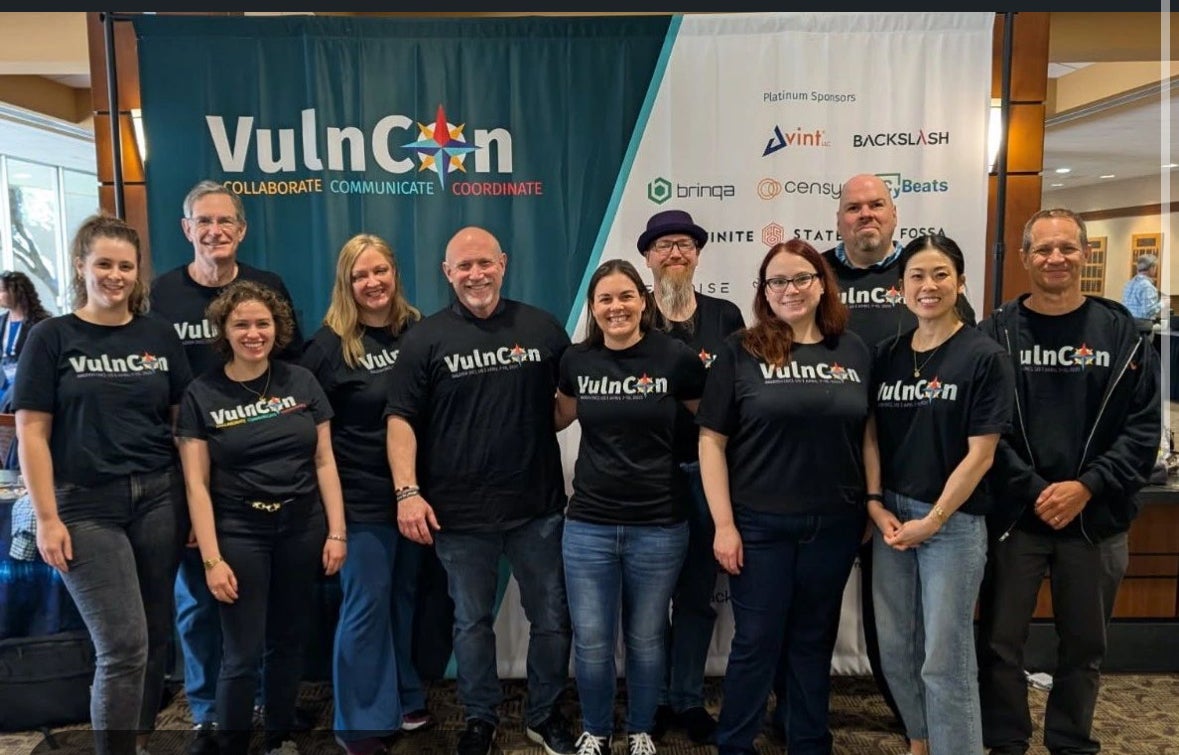
VulnCon 2025 has once again proven to be an essential gathering for security professionals, fostering collaboration, innovation, and progress in vulnerability management. This matches well with the OpenSSF continued championing for transparency and best practices in open source security. Practitioners from around the world gathered in Raleigh, NC, the week of April 7-10, 2025 to share knowledge, collaborate, and raise awareness of key issues within the global vulnerability management ecosystem.  We wanted to share my key takeaways from this year’s conference and highlight some of the insightful contributions from our community members.

OpenSSF’s Engagement in Cybersecurity 

The Open Source Security Foundation (OpenSSF) seeks to make it easier to sustainably secure the development, maintenance, and consumption of the open source software (OSS) we all depend on. We work on this by fostering collaboration with fellow industry groups like the CVE Program and FIRST, establishing best practices like our recently released Principles for Package Repository Security guide, and developing innovative solutions like Open Source Project Security Baseline, or engaging in global cybersecurity legislation and public policy conversations with our Global Cyber Policy Working Group. Cross-industry collaboration and knowledge sharing is crucial to properly address major challenges by fostering innovation, knowledge sharing, driving sustainable growth, and maximizing the impacts of our collective efforts.

The OpenSSF was thrilled to have a notable presence at VulnCon with significant representation from our Vulnerability Disclosures Working Group and other projects throughout the week. Our engagement in this event illustrates our commitment to community engagement and further supports our strategy to actively engage with the community and facilitate collaboration across industry stakeholders to sustainably address open source software security challenges effectively with transparent operations and governance.

The partnership between the OpenSSF and the FIRST PSIRT SIG showcases how industry and upstream effectively work together on these issues that have global impacts and how we’re better collectively collaborating to solve these complex and far-reaching challenges. Through our co-work on industry standards, and frameworks, or an event like VulnCon – we’re better together!

By the Numbers

The inaugural VulnCon was a cross-industry effort that was held in March 2024. There were 360 security professionals in attendance, with an additional 239 participating virtually (599 total) with nearly 40 sessions given. 2025 saw a dramatic increase in the participants and volume of content shared! This year there were 448 in person attendees with 179 global friends watching and participating virtually (627 total). 294 organizations attended from 36 countries. The program itself almost doubled, adding a 4th full day of sessions and expanding the number of tracks provided up to 100 sessions. Of this, I am proud to say that the OpenSSF members provided over 16 sessions about our community’s work and 46 total sessions given by member representatives.

The Power of Collaboration in Vulnerability Management

This year’s VulnCon featured an amazing docket of talks and workshops spanning the broad spectrum of vulnerability management, disclosure, and coordination. Open Source Software was discussed throughout the four day event, driving home to me how much influence and exposure upstream has on industry and public policy.

Here are a few of my key takeaways:

  1. The Importance of Vulnerability Metadata
    • Vulnerability metadata is crucial for the ecosystem, and OpenSSF’s needs and contributions in this area were front and center. There were numerous talks about OSV and how gaining deeper insights into upstream metadata helps everyone involved. Our members also helped lead and participate in discussions around SBOM, VEX, Vulnerability identifiers like CVE, and helping align software identifiers and finding paths forward around things like CPE and PURL.
  2. Understanding the Open Source Supply Chain
    • The talk from Apache Airflow and Alpha-Omega was a great example of how projects are working with their critical dependencies. They shared how downstream users can do similar work for better security outcomes. Downstream is slowly waking to the notion that more attention, due-diligence, and participation is needed to help make the upstream open source projects they consume continue to be successful.
  3. EU’s Cyber Resilience Act (CRA) Takes Center Stage
    • April 8 featured a dedicated track on the CRA. This law has major implications for vendors and how they assess risk and conduct due diligence across their supply chains. Open source stewards like the Linux Foundation will be essential partners as manufacturers work to meet their CRA obligations by December 2027. Our Global Cyber Policy Working Group is collaborating with key open source peers, industry partners, and the European Commission to assist open source developers, Open Source Stewards, and Manufacturers prepare for the quickly approaching 2026 and final 2027 deadlines.
  4. OSS Security Day: A Focused Deep Dive
    • April 9 was designated as “OSS Security Day,” with 20 sessions focused on various aspects of securing open source software. One key focus was on OpenSSF’s Security Baseline. The Baseline initiative provides a structured set of security requirements aligned with international cybersecurity frameworks, standards, and regulations, aiming to bolster the security posture of open source software projects.

What’s Next? Get Involved with OpenSSF

At the end of the day, security is about effectively managing risk and preparing for the inevitable threats that loom on the horizon. Events such as VulnCon or the forthcoming CNCF-OpenSSF SecurityCon allow experts to come together, share their hard-won wisdom, raise awareness of issues of concern, and collaborate on solutions to address security issues around the world.

The conversations at VulnCon reaffirm the importance of continued engagement in the security community. If you’re interested in contributing to the advancement of open source security, I encourage you to join the OpenSSF community.

Join the OpenSSF mailing list to stay informed about upcoming events, working groups, and initiatives.

For those who couldn’t make it, you can check out recorded content from VulnCon 2024 on YouTube and look out for the VulCon 2025 playlist to get a sense of the discussions shaping the future of vulnerability management. Thank you to all of our amazing community members who were able to come out and demonstrate the power of collaboration of our open source security community and partner with our peers and downstreams within industry, security research, and global governments.

OpenSSF Newsletter – March 2025

By Newsletter

Welcome to the March 2025 edition of the OpenSSF Newsletter! Here’s a roundup of the latest developments, key events, and upcoming opportunities in the Open Source Security community.

TL;DR

This month, the OpenSSF invites you to participate in global Community Days and explore new initiatives to strengthen open source security throughout 2025. Tune in to the latest podcast episode highlighting key insights from leaders at Intel and GitHub, learn about the recent Policy Summit in Washington, D.C., and enroll in the new, free cybersecurity course designed specifically for software development managers. Plus, stay informed about exciting project updates and upcoming community events!

Join us at OpenSSF Community Day Events in North America, India, Japan, and Europe!

OpenSSF Community Days bring together security and open source experts to drive innovation in software security.

âś… Secure your spot – Register today!

âś… Have insights to share? Submit to speak before CFP closes!

âś… Support the mission – Become a sponsor!

Join us in shaping a safer and more secure digital world. 

2025 OpenSSF Content Themes: Strengthening Open Source Security Throughout the Year

Content_theme

Cybersecurity is an ongoing challenge, and OpenSSF is leading efforts to strengthen open source security in 2025. This blog outlines the key content themes for the year, from strengthening OSS ecosystems to enhancing security tools and addressing vulnerabilities. Each month, OpenSSF will explore these critical topics through events, expert discussions, and blog contributions. Stay updated on these discussions and learn how you can contribute to OpenSSF’s mission.

What’s in the SOSS? An OpenSSF Podcast is back for Season 2!

In Season 2’s first episode, CRob chats with Arun Gupta (Intel, OpenSSF Governing Board Chair) and Zach Steindler (GitHub, OpenSSF TAC Chair) about lessons learned in open source security from 2024 and what’s ahead for 2025.

  • How the Mission, Vision, Values, Strategy, and Roadmap (MVVSR) framework is shaping OpenSSF’s focus
  • The biggest security challenges faced in 2024, from supply chain attacks to SBOM adoption
  • Exciting initiatives for 2025—including making security more accessible to open source maintainers

Join the conversation and get insights into the future of open source security. Listen now and stay tuned as we announce our new co-host!

OpenSSF Hosts 2025 Policy Summit in Washington, D.C. to Tackle Open Source Security Challenges

The OpenSSF successfully hosted the 2025 Policy Summit in Washington, D.C., bringing together industry leaders and security experts to address open source security challenges. The event featured keynotes, panel discussions, and breakout sessions focused on AI security, software supply chain governance, and policy recommendations for secure OSS consumption. 

“The OpenSSF is committed to tackling the most pressing security challenges facing the consumption of open source software in critical infrastructure and beyond ” said Steve Fernandez, General Manager, OpenSSF. 

Discussions highlighted the importance of industry-led security initiatives, collaboration with policymakers, and the need for standardized security frameworks. Following the summit, OpenSSF will refine security guidance and best practices to enhance open source software security globally. Learn more about the event, key takeaways, OpenSSF’s Vision, and how to get involved in shaping open source security policy. 

NEW FREE COURSE: Security for Software Development Managers (LFD125)

Security for Software Development Managers course

The OpenSSF and Linux Foundation Education have launched a new, free cybersecurity e-Learning course, Security for Software Development Managers (LFD125). Designed for those who manage or aspire to manage developer teams, this course covers critical security concepts needed to build resilient applications. Participants will learn how to identify vulnerabilities, implement proactive security measures, and guide their teams in creating secure software. Security for Software Development Managers (LFD125) is a self-paced, 2-hour course that includes access to a discussion forum for engagement with experts and peers. Upon successful completion, participants receive a digital badge and certificate. 

Enroll today and strengthen your leadership skills in software security!

News from OpenSSF Community Meetings and Projects

In the News

Meet OpenSSF at These Upcoming Events!

You’re invited to…

See You Next Month! 

We want to get you the information you most want to see in your inbox. Have ideas or suggestions for next month’s newsletter about the OpenSSF? Let us know at marketing@openssf.org, and see you next month! 

Regards,

The OpenSSF Team

What’s in the SOSS? Podcast #25 – S2E02 Empowering Security: Yesenia Yser on Open Source, AI, and Personal Branding

By Podcast

Summary

In this inspiring episode of “What’s in the SOSS?”, we welcome our new Co-Host, cybersecurity expert and open source advocate Yesenia Yser. Join hosts CRob and Yesenia as they delve into her compelling journey from discovering open source at Red Hat to pioneering AI security at Microsoft. Learn how Yesenia blends her passion for cybersecurity, Brazilian jiu-jitsu, and empowering communities—especially women—to shape her personal brand and advocacy efforts. Don’t miss this lively conversation full of actionable insights for anyone interested in cybersecurity, open source communities, and personal growth.

Conversation Highlights

00:18 – Introduction to Yesenia Yser
00:55 – Yesenia’s open source origin story
03:30 – From cybersecurity professional to jiu-jitsu practitioner
05:56 – Building a personal brand in tech and beyond
09:04 – Advocating diversity in tech through the BEAR group
12:40 – Fun rapid-fire round (VI or Emacs, Coke or Pepsi, favorite open source mascot, spicy vs. mild food, and more)
13:52 – Yesenia joins as new co-host of “What’s in the SOSS?”
15:39 – Advice for breaking into open source and cybersecurity

Transcript

Soundbite – Yesenia Yser
One thing that you’ll hear me advocate over and over again is to find an open source project that will support your career growth. Whether you’re looking to go into program management, business analyst, management, or your technical skills, find a project that aligns with you. You can jump on the open source Slack and hit up in general, just say, I’m interested in doing this, this, this. This is how many hours I have. And I bet you someone’s going to be.

Hey, come over to our group, join us. We’ll teach you along the way. That’s the best thing I know about open source and the tech is that folks are very open to teach.

Intro – CRob (00:18)
Hello and Welcome to “What’s in the SOSS?” OpenSSF’s podcast where we talk to interesting people throughout the open source ecosystem. My name is CRob, one of your hosts, and today we have an incredible treat. I’m talking to a very dear friend of mine and amazing open source contributor, Yesenia. We have some amazing news to share at the end of the podcast today.

CRob (00:49):
Yesi, please introduce yourself to the audience and tell us about your open source origin story.

Yesenia Yser (00:54):
Hey everyone! Thank you for those listening. I’m Yesenia, born and raised in Miami, South Florida. I’m Cuban American, I’ve been in the cyber tech industry for over 12 years, a bachelor’s in computer science, and a master’s in digital forensics. I usually like to joke that I “social engineered” my way into my first security role. It was always interesting because in school I used a bunch of tools that were online and free.
My first couple of jobs, we used a bunch of libraries and things of that nature. It wasn’t until my time at Red Hat, which was like six years into my career that I realized what I was actually using and that it was open source and there was a huge community of great and amazing folks behind it that are part of it. So from there, I started exploring open source more exploring OpenSSF, a community that I do a lot of, advocacy work and contribution to. But it was just, it was very interesting that for someone that uses it, this is just, you know, everyday person that’s like learning how to code. You bring in Python, you import your libraries and you got to keep them up to date every now and then. And you don’t really know where they come from, but they come from a little black hole that’s called the open source space. Then, my journey took me from Red Hat. worked at the Linux foundation on the Alpha-Omega project. So I was helping with the Omega piece of it and we, in which we were automating, security vulnerability identification and open source software. Then my career took me to Microsoft where right now I’m working on artificial intelligence and open source security research. In that space, I get to explore both AI from the large tech industry and all the threats and yumminess that is in this emerging new technology. And then I get to share my love and passion for open source.

CRob (02:48):
That’s awesome. And as we mentioned, you and I both work together at Red Hat, where you were the very first supply chain security engineer. So I am a little bit more up to speed with your background than other folks may be. But, I think what I find very fascinating about you is that you not only are an amazing technologist and super smart, but you also have a lot of outside of work activities that I find very fascinating. Could you maybe talk about how things like your passion for jiu-jitsu and outside activities kind of inform your practice around open source security and AI security?

Yesenia (03:30):
Yeah. So starting at Red Hat was pretty, pretty cool. I was there as the first supply chain security engineer. A very big breach happened called SolarWinds, in which it blew up the supply chain security space for the industry. So, it was really great to be in the forefront of that in such a big company that is big and open source and be able to see all the plethora of things that happened in the wild wild west that is the development industry.

So outside of work is usually what I like to say about my day job. So by the day, I’m a security professional. By night, I’m a jiujiteira, which means a jiu-jitsu practitioner. I’ve been working, I’ve been training and teaching jiu-jitsu for almost seven years now. Started with the kids and working with them. And it was just lovely to see their faces bright light up when they learned a new technique. And over the years I’ve seen parallels between jiu-jitsu and my own cyber career, in which I became a mirror of things that I was seen as myself in a leader in the cyberspace that was holding me back. And then that was being mirrored into my jiu-jitsu. A year or so ago, I started a nonprofit called the Lioness Instincts, in which our mission is to empower women to protect themselves both physically and digitally, because as a security professional and a presented to jiu-jitsu instructor, which we would teach women’s self-defense classes and teach kids. I saw a huge boost in just their self-confidence and being able to work through some of the traumas that does happen through some of the crazy things that happen throughout the world. So we started the nonprofit. And if I’m not in the cyber world, I’m on the mat teaching and training. I also have two dogs that I teach and you’ll see me with them as well.

They’re their own plethora of tricks and cuteness.

CRob (05:25):
That’s awesome. And I know how much this kind of outside advocacy and your jiu-jitsu kind of affects, know, it colors your thinking and how you conduct yourself. Let’s think about this. I know you’ve kind of taken this and kind of started to develop a personal brand around these types of things. Can you maybe say why it’s important for people to find these opportunities and these passions and kind of try to do this for themselves? How does this personal branding help you?

Yesenia (05:56):
Yes. So for me, it’s my personal brand. And for those that follow, I’m called cyber jiujiteira online because of the mixture of, me, gives me a purpose and an avenue. And usually when I make a decision of something that I’m going to do, I ask myself, does it match or fit my brand? And my brand has its own pillars of advocacy as it has its five, has its five pillars, which is, cybersecurity and promoting advocacy, education and guidance to get more folks into the industry. There’s just the empowerment, self-defense, digital privacy piece that involves digital and the physical side, teaching and lessons, motivation, and then lifestyles. Because I normally talk to folks and they’re like, you have a very interesting lifestyle of just working in training, working in training, and then running a nonprofit. So I feel like a brand helps you not only keep because I have ADHD, so I’m all over the place, but it helps me keep aligned with what I’m doing and then ensuring that I can go back to it when it comes to social media platforms, it helps people know who I am and what I stand for. So I’ve been in conferences, both physical, like for jiu-jitsu things, and then for cybersecurity things or open source. And they’re like, you’re the jiu-jitsu girl. You’re the cyber girl. So it’s great. I’m like, yeah, you know me.

It becomes a cool way for folks to connect with you on a more personal level, and understand who you are. And in that, once you hear that you understand that I’m a martial artist and any thoughts around martial artists, you relate it to me in a, in a way. So martial artists tend to be disciplined. They tend to be focused. They tend to have patience. So as an individual that’s applying to cybersecurity roles that are fast pacing, working with executives. Things are constantly moving. You have to adapt quickly. The mindset of a martial artist, I think, falls very well into that, which helps with interviewing. And somebody said it the other day, which I think is great for branding, is your brand should be getting you the interviews. So instead of you searching out for these interviews, your brand should be helping you acquire what’s right for you.

And it’s just very important when you’re networking and connecting with folks that your brand speaks on who you are, whether or not you’re in the room.

CRob (08:29):
Excellent. Yeah. And thank you for all you do for especially, you know, late getting ladies into cyber and talking about self-defense. I think that’s amazing contribution back given back. We get to work together in the open SSF as part of a group that also has a lot of very strong advocacy bent to it. So maybe could you talk a little bit about the bear group that we participate in and you know, why is it so important to kind of bring awareness and kind of reach out to people that may not be currently in this career path of this world.

Yesenia (09:03):
Yes. So the BEAR, I think what we’re doing in the group is great. So bear stands for belonging.The E is empowerment, is for allyship and R is for representation. And I, I strongly feel very passionate about this because in the open source space, let’s just start with the challenges. A lot of the times are open source maintainers. They created this when they were younger. It was a college project. It was just a fun idea that they had and somehow it went very mainstream. It went viral, blew up, and now is in 80 to 90 % of software that’s out there, right? So we have this one tool that’s maintained by one person who probably has a family, who probably works two or three jobs. And it’s crucial to everything from US government infrastructure to maybe you know, outside sources to big tech company, industries. So the idea of Bayer is to be able to make that bridge a little bit easier for folks. Cause I know myself when I was starting, as I mentioned earlier, I didn’t know what open source was. was just like, okay, some cool thing that I can pull from online, but having these like community office hours, which we do once a month, we get to highlight different areas of like how to get started into space, how to look for mentorships.

We talk about your branding and how to get that. And we just highlight a lot of amazing voices in the community and that we are associated with to bring out different representations and ideas that will help folks understand how to get into the industry. This is also for folks already in the industry, because if you want to give back or you have knowledge that’s very important, you can set up your own mentorship. You can join our community and plan different events.

We’re looking to also host conversations at different OpenSSF and open source community conferences. And this advocacy is important because it’s going to give maintainers and open source contributors a little bit of extra break room to bring more folks in. One of the biggest issues you hear is that people just don’t have time. But if they have an individual…it’s willing to take on a task, right? And it doesn’t have to be a coding task. It can be writing documentation to make it easier for other people to use it. It could be updating the website. It could be a plethora of different skills that doesn’t require coding that can assist the maintainer in coming on. And we can just improve our open source software and tools usage.

CRob (11:43):
Yeah, it’s an, love the mission of the bear group and I love kind of the, how we’re moving forward with the community office hours. I think it’s been really impactful to kind of give these different perspectives and try to help have a very broad contributor base and help people break into something that sometimes there’s a lot of obstacles to, right?

Yesenia (12:04):
There’s a lot. And if you’ve missed any of the previous ones, they’re on YouTube. You can check them out and join us on Slack and ask, know, questions. We’ll be willing to either make a community office hours specific for that or just answer your questions right there on Slack. Even if you’re looking for a project.

CRob (12:23):
Cool. Well, let’s move on to the rapid fire part of the interview. All right. I have a couple of wacky questions. You probably don’t want to be drinking a drink when I ask you this. We don’t need any spit takes, but first question, VI or Emacs.

Yesenia (12:42):
VI or Emacs, we’re going to go with VI.

CRob (12:45):
Nice. Excellent, excellent. There are no wrong answers.

Yesenia (12:49):
Here. Haha.

CRob (12:52):
Next question, Coke or Pepsi? Yes, there was a right answer for that one and you’ve got it. Who’s your favorite open source mascot?

Yesenia (12:54):
CRob with the goose hat.

CRob (13:05):
CRob the goose hat?! Haha.

I don’t think you have a tattoo of that one yet though.

Yesenia (13:11):
Yet, but the one I do have a tattoo is Tux

CRob (13:15):
Very nice. What’s your favorite adult beverage?

Yesenia (13:19):
Coffee. This place is coffee.

CRob (13:23):
Yum yum yum. Love me some coffee. And last rapid fire question, spicy or mild food?

Yesenia (13:31):
None of the above. I’m Cuban. We don’t do spicy. It all hurts. haha.

CRob (13:39):
Fair enough.

Yesenia (13:40):
Seasoned, seasoned with a dull.

CRob (13:43):
Okay, excellent.

Well, thank you for playing rapid fire. So before I move on to our last question, I wanted to let the audience know that Yacinia is going to be joining us as a featured co-host of What’s in the SOSS. So you’re going to see her talking to some other amazing, interesting people. Do you want to give us kind of a little taste of what you, kind of the types of topics or people you’re interested in exploring as you’re going through and doing interviews?

Yesenia (14:11):
Yeah, I’m just interested in getting folks in the open source community and then external that may not even be aware that they’re using open source or how they can get involved. Our upcoming community office hours is going to bring in some amazing voices. But really just anybody that’s interested in speaking, speaking in the open source, talking about their journey in any shape or form or bringing in some technical coolness that, you know, like to spice up the SOSS, right?

So if you are interested… Was that the play if I said spicy? Yeah, I had feeling that was going be the audio.

Yeah, just looking at my list, but, once I post, this episode or just a general call for action, I’ll keep the community up to date, but if anyone listening to this is interested or has an awesome voice that they would love to share the space with, let me know.

CRob (15:11):
Yeah, I think this is going to be really amazing. Kind of reaching out to new voices and perspectives and just kind of broadening the awareness of the things the foundation does and the importance of open source security. So thank you for joining us. Yeah. And to that end, as we launch you off on your new endeavor, what’s your call to action or what advice do you have for people trying to get into this crazy field of cyber and open source security?

Yesenia (15:24):
Thank you for having me.

One thing that you’ll hear me advocate over and over again is to find an open source project that will support your career growth. Whether you’re looking to go into program management, business analyst, management, or your technical skills, find a project that aligns with you. You can jump on the open source Slack and hit up in general, just say, I’m interested in doing this, this, this. This is how many hours I have. And I bet you someone’s going to be.

Hey, come over to our group, join us. We’ll teach you along the way. That’s the best thing I know about open source and the tech is folks are very open to teach.

CRob (16:18):
Well, again, thank you for joining us today and thank you for volunteering to help us co-host the podcast. And we look forward with eager anticipation to the amazing interviews you’re going to do for us. And with that, it’s a wrap. Thank you all for joining us today.

Yesenia (16:29):
It’s going to be amazing. Thank you.

CRob (16:38):
Thank you.

Outro (18:40):
Enjoyed the podcast? Subscribe to “What’s in the SOSS?” on Spotify, Apple Podcasts, Pocket Casts, or your favorite platform. Stay updated with OpenSSF news and events by subscribing to our newsletter at openssf.org/newsletter. Join the OpenSSF community at openssf.org/get-involved, and connect with us on LinkedIn.

Thanks for listening, and we’ll catch you next time on “What’s in the SOSS?”