By Madalin Neag, Kate Stewart, and David A. Wheeler
In our previous blog post, we explored how the Software Bill of Materials (SBOM) should not be a static artifact created only to comply with some regulation, but should be a decision ready tool. In particular, SBOMs can support risk management. This understanding is increasing thanks to the many who are trying to build an interoperable and actionable SBOM ecosystem. Yet, fragmentation, across formats, standards, and compliance frameworks, remains the main obstacle preventing SBOMs from reaching their full potential as scalable cybersecurity tools. Building on the foundation established in our previous article, this post dives deeper into the concrete mechanisms shaping that evolution, from the regulatory frameworks driving SBOM adoption to the open source initiatives enabling their global interoperability. Organizations should now treat the SBOM not merely as a compliance artifact to be created and ignored, but as an operational tool to support security and augment asset management processes to ensure vulnerable components are identified and updated in a timely proactive way. This will require actions to unify various efforts worldwide into an actionable whole.
Accelerating Global Policy Mandates
The global adoption of the Software Bill of Materials (SBOM) was decisively accelerated by the U.S. Executive Order 14028 in 2021, which mandated SBOMs for all federal agencies and their software vendors. This established the SBOM as a cybersecurity and procurement baseline, reinforced by the initial NTIA (2021) Minimum Elements (which required the supplier, component name, version, and relationships for identified components). Building on this foundation, U.S. CISA (2025) subsequently updated these minimum elements, significantly expanding the required metadata to include fields essential for provenance, authenticity, and deeper cybersecurity integration. In parallel, European regulatory momentum is similarly mandating SBOMs for market access, driven by the EU Cyber Resilience Act (CRA). Germany’s BSI TR-03183-2 guideline complements the CRA by providing detailed technical and formal requirements, explicitly aiming to ensure software transparency and supply chain security ahead of the CRA’s full enforcement.
To prevent fragmentation and ensure these policy mandates translate into operational efficiency, a wide network of international standards organizations is driving technical convergence at multiple layers. ISO/IEC JTC 1/SC 27 formally standardizes and oversees the adoption of updates to ISO/IEC 5962 (SPDX), evaluating and approving revisions developed by the SPDX community under The Linux Foundation. The standard serves as a key international baseline, renowned for its rich data fields for licensing and provenance and support for automation of risk analysis of elements in a supply chain. Concurrently, OWASP and ECMA International maintain ECMA-424 (OWASP CycloneDX), a recognized standard optimized specifically for security automation and vulnerability linkage. Within Europe, ETSI TR 104 034, the “SBOM Compendium,” provides comprehensive guidance on the ecosystem, while CEN/CENELEC is actively developing the specific European standard (under the PT3 work stream) that will define some of the precise SBOM requirements needed to support the CRA’s vulnerability handling process for manufacturers and stewards.
Together, these initiatives show a clear global consensus: SBOMs must be machine-readable, verifiable, and interoperable, supporting both regulatory compliance over support windows and real-time security intelligence. This global momentum set the stage for the CRA, which now transforms transparency principles into concrete regulatory obligations.
EU Cyber Resilience Act (CRA): Establishing a Legal Requirement
The EU Cyber Resilience Act (CRA) (Regulation (EU) 2024/2847) introduces a legally binding obligation for manufacturers to create, 1maintain, and retain a Software Bill of Materials (SBOM) for all products with digital elements marketed within the European Union. This elevates the SBOM from a voluntary best practice to a legally required element of technical documentation, essential for conformity assessment, security assurance, and incident response throughout a product’s lifecycle. In essence, the CRA transforms this form of software transparency from a recommendation into a condition for market access.
Core Obligations for Manufacturers under the CRA include:
- SBOM Creation – Manufacturers must prepare an SBOM in a commonly used, machine-readable format [CRA I(II)(1)], such as SPDX or CycloneDX.
- Minimum Scope – The SBOM must cover at least the top-level dependencies of the product [CRA I(II)(1)]. While this is the legal minimum, including deeper transitive dependencies is strongly encouraged.
- Inclusion & Retention – The SBOM must form part of the mandatory technical documentation and be retained for at least ten years (Art.13) after the product has been placed on the market.
- Non-Publication Clause – The CRA requires the creation and availability of an SBOM but does not mandate its public disclosure Recital 77. Manufacturers must provide the SBOM upon request to market surveillance authorities or conformity assessment bodies for validation, audit, or incident investigation purposes.
- Lifecycle Maintenance – The SBOM must be kept up to date throughout the product’s maintenance and update cycles, ensuring that any component change or patch is reflected in the documentation Recital 90.
- Vulnerability Handling – SBOMs provide the foundation for identifying component vulnerabilities under the CRA, while full risk assessment requires complementary context such as exploitability and remediation data. (Annex I)
The European Commission is empowered, via delegated acts under Article 13(24), to further specify the format and required data elements of SBOMs, relying on international standards wherever possible. To operationalize this, CEN/CENELEC is developing a European standard under the ongoing PT3 work stream, focused on vulnerability handling for products with digital elements and covering the essential requirements of Annex I, Part II of the CRA. Its preparation phase includes dedicated sub-chapters on formalizing SBOM structures, which will serve as the foundation for subsequent stages of identifying vulnerabilities and assessing related threats (see “CRA workshop ‘Deep dive session: Vulnerability Handling” 1h36m35s).
In parallel, the U.S. Cybersecurity and Infrastructure Security Agency (CISA) continues to shape global SBOM practices through its “Minimum Elements” framework and automation initiatives. These efforts directly influence Europe’s focus on interoperability and structured vulnerability handling under the CRA. This transatlantic alignment helps ensure SBOM data models and processes evolve toward a consistent, globally recognized baseline. CISA recently held a public comment window ending October 2, 2025 on a draft version of a revised set of minimum elements, and is expected to publish an update to the original NTIA Minimum Elements in the coming months.
Complementing these efforts, Germany’s BSI TR-03183-2 provides a more detailed technical specification than the original NTIA baseline, introducing requirements for cryptographic checksums, license identifiers, update policies, and signing mechanisms. It already serves as a key reference for manufacturers preparing to meet CRA compliance and will likely be referenced in the forthcoming CEN/CENELEC standard together with ISO/IEC and CISA frameworks. Together, the CRA and its supporting standards position Europe as a global benchmark for verifiable, lifecycle aware SBOM implementation, bridging policy compliance with operational security.
Defining the Unified Baseline: Convergence in Data Requirements
The SBOM has transitioned from a best practice into a legal and operational requirement due to the European Union’s Cyber Resilience Act (CRA). While the CRA mandates the SBOM as part of technical documentation for market access, the detailed implementation is guided by documents like BSI TR-03183-2. To ensure global compliance and maximum tool interoperability, stakeholders must understand the converging minimum data requirements. To illustrate this concept, the following comparison aligns the minimum SBOM data fields across the NTIA, CISA, BSI, and ETSI frameworks, revealing a shared move toward completeness, verifiability, and interoperability.
| Data Field |
NTIA (U.S., 2021 Baseline) |
CISA’s Establishing a Common SBOM (2024) |
BSI TR-03183-2 (Germany/CRA Guidance) (2024) |
ETSI TR 104 034 (Compendium) (2025) |
| Component Name |
Required |
Required |
Required |
Required |
| Component Version |
Required |
Required |
Required |
Required |
| Supplier |
Required |
Required |
Required |
Required |
| Unique Identifier (e.g., PURL, CPE) |
Required |
Required |
Required |
Required |
| Cryptographic Hash |
Recommended |
Required |
Required |
Optional |
| License Information |
Recommended |
Required |
Required |
Optional |
| Dependency Relationship |
Required |
Required |
Required |
Required |
| SBOM Author |
Required |
Required |
Required |
Required |
| Timestamp (Date of Creation) |
Required |
Required |
Required |
Required |
| Tool Name / Generation Context |
Not noted |
Not noted |
Required |
Optional |
| Known Unknowns Declaration |
Optional |
Required |
Optional |
Optional |
| Common Format |
Required |
Not noted |
Required |
Required |
| Depth |
Not noted |
Not noted |
Not noted |
Optional |
- NTIA (2021): Established the basic inventory foundation necessary to identify components (who, what, and when).
- CISA (2024): Framing Software Component Transparency establishes a structured maturity model by defining minimum, recommended, and aspirational SBOM elements, elevating SBOMs from simple component lists to verifiable security assets. CISA is currently developing further updates expected in 2025 to extend these principles into operational, risk-based implementation guidance.
- BSI TR-03183-2: Mirrors the CISA/NTIA structure but mandates strong integrity requirements (Hash, Licenses) from the compliance perspective of the CRA, confirming the strong global convergence of expectations.
- ETSI TR 104 034: As a technical compendium, it focuses less on specific minimum fields and more on the necessary capabilities of a functional SBOM ecosystem (e.g., trust, global discovery, interoperability, and lifecycle management).
The growing alignment across these frameworks shows that the SBOM is evolving into a globally shared data model, one capable of enabling automation, traceability, and trust across the international software supply chain.
Dual Standard Approach: SPDX and CycloneDX
The global SBOM ecosystem is underpinned by two major, robust, and mature open standards: SPDX and CycloneDX. Both provide a machine-processable format for SBOM data and support arbitrary ecosystems. These standards, while both supporting all the above frameworks, maintain distinct origins and strengths, making dual format support a strategic necessity for global commerce and comprehensive security.
The Software Package Data Exchange (SPDX), maintained by the Linux Foundation, is a comprehensive standard formally recognized by ISO/IEC 5962 in 2021. Originating with a focus on capturing open source licensing and intellectual property in a machine readable format, SPDX excels in providing rich, detailed metadata for compliance, provenance, legal due diligence, and supply chain risk analysis. Its strengths lie in capturing complex license expressions (using the SPDX License List and SPDX license expressions) and tracking component relationships in great depth, together with its extensions to support linkage to security advisories and vulnerability information, making it the preferred standard for rigorous regulatory audits and enterprise-grade software asset management. As the only ISO-approved standard, it carries significant weight in formal procurement processes and traditional compliance environments. It supports multiple formats (JSON, XML, YAML, Tag/Value, and XLS) with free tools to convert between the formats and promote interoperability.
The SPDX community has continuously evolved the specification since its inception in 2010, and most recently has extended it to a wider set of metadata to support modern supply chain elements, with the publication of SPDX 3.0 in 2024. This update to the specification contains additional fields & relationships to capture a much wider set of use cases found in modern supply chains including AI. These additional capabilities are captured as profiles, so that tooling only needs to understand the relevant sets, yet all are harmonized in a consistent framework, which is suitable for supporting product line management Fields are organized into a common “core”, and there are “software” and “licensing” profiles, which cover what was in the original specification ISO/IEC 5962. In addition there is now a “security” profile, which enables VEX and CSAF use cases to be contained directly in exported documents, as well as in databases There is also a “build” profile which supports high fidelity tracking of relevant build information for “Build” type SBOMs. SPDX 3.0 also introduced a “Data” and “AI” related profiles, which made accurate tracking of AI BOMs possible, with support for all the requirements of the EU AI Act (see table in linked report). As of writing, the SPDX 3.0 specification is in the final stages of being submitted to ISO/IEC for consideration.
CycloneDX, maintained by OWASP and standardized as ECMA-424, is a lightweight, security-oriented specification for describing software components and their interdependencies. It was originally developed within the OWASP community to improve visibility into software supply chains. The specification provides a structured, machine-readable inventory of elements within an application, capturing metadata such as component versions, hierarchical dependencies, and provenance details. Designed to enhance software supply chain risk management, CycloneDX supports automated generation and validation in CI/CD environments and enables early identification of vulnerabilities, outdated components, or licensing issues. Besides its inclusion with SPDX in the U.S. federal government’s 2021 cybersecurity Executive Order, its formal recognition as an ECMA International standard in 2023 underscore its growing role as a globally trusted format for software transparency. Like SPDX, CycloneDX has continued to evolve since formal standardization and the current release is 1.7, released October 2025.
The CycloneDX specification continues to expand under active community development, regularly publishing revisions to address new use cases and interoperability needs. Today, CycloneDX extends beyond traditional SBOMs to support multiple bill-of-materials types, including Hardware (HBOM), Machine Learning (ML-BOM), and Cryptographic (CBOM), and can also describe relationships with external SaaS and API services. It integrates naturally with vulnerability management workflows through formats such as VEX, linking component data to exploitability and remediation context. With multi-format encoding options (JSON, XML, and Protocol Buffers) and a strong emphasis on automation.
OpenSSF and the Interoperability Toolkit
The OpenSSF has rapidly become a coordination hub uniting industry, government, and the open source community around cohesive SBOM development. Its mission is to bridge global regulatory requirements, from the EU’s Cyber Resilience Act (CRA) to CISA’s Minimum Elements and other global mandates, with practical, open source technical solutions. This coordination is primarily channeled through the “SBOM Everywhere” Special Interest Group (SIG), a neutral and open collaboration space that connects practitioners, regulators, and standards bodies. The SIG plays a critical role in maintaining consistent semantics and aligning development efforts across CISA, BSI, NIST, CEN/CENELEC, ETSI, and the communities implementing CRA-related guidance. Its work ensures that global policy drivers are directly translated into unified, implementable technical standards, helping prevent the fragmentation that so often accompanies fast-moving regulation.
A major focus of OpenSSF’s work is on delivering interoperability and automation tooling that turns SBOM policy into practical reality:
- Protobom tackles one of the field’s toughest challenges – format fragmentation – by providing a format-agnostic data model capable of seamless, lossless conversion between SPDX, CycloneDX, and emerging schemas.
- BomCTL builds on that foundation and offers a powerful, developer-friendly command line utility designed for CI/CD integration. It handles SBOM generation, validation, and transformation, allowing organizations to automate compliance and security workflows without sacrificing agility. Together, Protobom and Bomctl embody the principles shared by CISA and the CRA: ensuring that SBOM data is modular, transparent, and portable across tools, supply chains, and regulatory environments worldwide.
Completing this ecosystem is SBOMit, which manages the end-to-end SBOM lifecycle. It provides built-in support for creation, secure storage, cryptographic signing, and controlled publication, embedding trust, provenance, and lifecycle integrity directly into the software supply chain process. These projects are maintained through an open, consensus-driven model, continuously refined by the global SBOM community. Central to that collaboration are OpenSSF’s informal yet influential “SBOM Coffee Club” meetings, held every Monday, where developers, vendors, and regulators exchange updates, resolve implementation challenges, and shape the strategic direction of the next generation of interoperable SBOM specifications.
OpenSSF’s strategic support for both standards – SPDX and CycloneDX – is vital for the entire ecosystem. By contributing to and utilizing both formats, most visibly through projects like Protobom and BomCTL which enable seamless, lossless translation between the two, OpenSSF ensures that organizations are not forced to choose between SPDX and CycloneDX. This dual format strategy satisfies the global requirement for using both formats and maximizes interoperability, guaranteeing that SBOM data can be exchanged between all stakeholders, systems, and global regulatory jurisdictions effectively.
A Shared Vision for Action
Through this combination of open governance and pragmatic engineering, OpenSSF is defining not only how SBOMs are created and exchanged, but how the world collaborates on software transparency.
The collective regulatory momentum, anchored by the EU Cyber Resilience Act (CRA) and the U.S. Executive Order 14028, supported by the CISA 2025 Minimum Elements revisions, has cemented the global imperative for Software Bill of Materials (SBOM). These frameworks illustrate deep global alignment: both the CRA and CISA emphasize that SBOMs must be structured, interoperable, and operationally useful for both compliance and cybersecurity. The CRA establishes legally binding transparency requirements for market access in Europe, while CISA’s work encourages SBOMs within U.S. federal procurement, risk management, and vulnerability intelligence workflows. Together, they define the emerging global consensus: SBOMs must be complete enough to satisfy regulatory obligations, yet structured and standardized enough to enable automation, continuous assurance, and actionable risk insight. The remaining challenge is eliminating format and semantic fragmentation to transform the SBOM into a universal, enforceable cybersecurity control.
Achieving this global scalability requires a unified technical foundation that bridges legal mandates and operational realities. This begins with Core Schema Consensus, adopting the NTIA 2021 baseline and extending it with critical metadata for integrity (hashes), licensing, provenance, and generation context, as already mandated by BSI TR-03183-2 and anticipated in forthcoming CRA standards. To accommodate jurisdictional or sector-specific data needs, the CISA “Core + Extensions” model provides a sustainable path: a stable global core for interoperability, supplemented by modular extensions for CRA, telecom, AI, or contractual metadata. Dual support for SPDX and CycloneDX remains essential, satisfying the CRA’s “commonly used formats” clause and ensuring compatibility across regulatory zones, toolchains, and ecosystems.
Ultimately, the evolution toward global, actionable SBOMs depends on automation, lifecycle integrity, and intelligence linkage. Organizations should embed automated SBOM generation and validation (using tools such as Protobom, BomCTL, and SBOMit) into CI/CD workflows, ensuring continuous updates and cryptographic signing for traceable trust. By connecting SBOM information with vulnerability data in internal databases, the SBOM data becomes decision-ready, capable of helping identify exploitable or end-of-life components and driving proactive remediation. This operational model, mirrored in the initiatives of Japan (METI), South Korea (KISA/NCSC), and India (MeitY), reflects a decisive global movement toward a single, interoperable SBOM ecosystem. Continuous engagement in open governance forums, ISO/IEC JTC 1, CEN/CENELEC, ETSI, and the OpenSSF SBOM Everywhere SIG, will be essential to translate these practices into a permanent international standard for software supply chain transparency.
Conclusion: From Compliance to Resilient Ecosystem
The joint guidance “A Shared Vision of SBOM for Cybersecurity” insists on these global synergies under the endorsement of 21 international cybersecurity agencies. Describing the SBOM as a “software ingredients list,” the document positions SBOMs as essential for achieving visibility, building trust, and reducing systemic risk across global digital supply chains. That document’s central goal is to promote immediate and sustained international alignment on SBOM structure and usage, explicitly urging governments and industries to adopt compatible, unified systems rather than develop fragmented, country specific variants that could jeopardize scalability and interoperability.
The guidance organizes its vision around four key, actionable principles aimed at transforming SBOMs from static compliance documents into dynamic instruments of cybersecurity intelligence:
- Modular Architecture – Design SBOMs around a Core Schema Baseline that satisfies essential minimum elements (component identifiers, supplier data, versioning) and expand it with optional extensions for domain specific or regulatory contexts (e.g., CRA compliance, sectoral risk requirements). Support and improve OSS tooling that enables processing and sharing of this data in a variety of formats.
- Trust and Provenance – Strengthen authenticity and metadata transparency by including details about the generation tools, context, and version lineage, ensuring trust in the accuracy and origin of SBOM data.
- Actionable Intelligence – Integrate SBOM data with vulnerability and incident-response frameworks such as VEX and CSAF, converting static component inventories into decision ready, risk aware security data.
- Open Governance – Encourage sustained public–private collaboration through OpenSSF, ISO/IEC, CEN/CENELEC, and other international bodies to maintain consistent semantics and prevent fragmentation.
This Shared Vision complements regulatory frameworks like the EU Cyber Resilience Act (CRA) and reinforces the Open Source Security Foundation’s (OpenSSF) mission to achieve cross-ecosystem interoperability. Together, they anchor the future of SBOM governance in openness, modularity, and global collaboration, paving the way for a truly unified software transparency model.
The primary challenge to achieving scalable cyber resilience lies in the fragmentation of the SBOM landscape. Global policy drivers, such as the EU Cyber Resilience Act (CRA), the CISA-led Shared Vision of SBOM for Cybersecurity, and national guidelines like BSI TR-03183, have firmly established the mandate for transparency. However, divergence in formats, semantics, and compliance interpretations threatens to reduce SBOMs to static artifacts generated only because some regulation requires that they be created, rather than dynamic assets that can aid in security. Preventing this outcome requires a global commitment to a unified SBOM framework, a lingua franca capable of serving regulatory, operational, and security objectives simultaneously. This framework must balance policy diversity with technical capability universality, ensuring interoperability between European regulation, U.S. federal procurement mandates, and emerging initiatives in Asia and beyond. The collective engagement of ISO/IEC, ETSI, CEN/CENELEC, BSI, and the OpenSSF provides the necessary multistakeholder governance to sustain this alignment and accelerate convergence toward a common foundation.
Building such a framework depends on two complementary architectural pillars: Core Schema Consensus and Modular Extensions. The global core should harmonize essential SBOM elements, and CRA’s legal structure, into a single, mandatory baseline. Sectoral or regulatory needs (e.g., AI model metadata, critical infrastructure tagging, or crypto implementation details) should be layered through standardized modular extensions to prevent the ecosystem from forking into incompatible variants. To ensure practical interoperability, this architecture must rely on open tooling and universal machine-processable identifiers (such as PURL, CPE, SWID, and SWHID) that guarantee consistent and accurate linkage. Equally crucial are trust and provenance mechanisms: digitally signed SBOMs, verifiable generation context, and linkage with vulnerability data. These collectively transform the SBOM from a passive unused inventory into an actively maintained, actionable cybersecurity tool, enabling automation, real-time risk management, and genuine international trust in the digital supply chain, realizing the OpenSSF vision of “SBOMs everywhere.”
SBOMs have transitioned from a best practice to a requirement in many situations. The foundation established by the U.S. Executive Order 14028 has been legally codified by the EU’s Cyber Resilience Act (CRA), making SBOMs a non-negotiable legal requirement for accessing major markets. This legal framework is now guided by a collective mandate, notably by the Shared Vision issued by CISA, NSA, and 19 international cybersecurity agencies, which provides the critical roadmap for global alignment and action. Complementary work by BSI, ETSI, ISO/IEC, and OpenSSF now ensures these frameworks converge rather than compete.
To fully achieve global cyber resilience, SBOMs must not be merely considered as a compliance artifact to be created and ignored, but instead as an operational tool to support security and augment asset management processes. Organizations must:
- Integrate and Automate SBOMs: Achieve full lifecycle automation for SBOM creation and continuous updates, making it a seamless part of the DevSecOps pipeline.
- Maximize SBOM Interoperability: Mandate the adoption of both SPDX and CycloneDX to satisfy divergent global and regulatory requirements and ensure maximum tool compatibility.
- Operationalize with Open Source Software Leverage OpenSSF tools (Protobom, BomCTL, SBOMit) to rapidly implement and scale technical best practices.
- Drive Shared Governance for SBOMs: Actively engage in multistakeholder governance initiatives (CEN/CENELEC, ISO/IEC, CISA, ETSI, OpenSSF) to unify technical standards and policy globally.
- Enable Decision-Ready Processes that build on SBOMs: Implement advanced SBOM processes that link component data with exploitability and vulnerability context, transforming static reports into actionable security intelligence.
By embracing this shared vision, spanning among many others the CRA, CISA, METI, KISA, NTIA, ETSI, and BSI frameworks, we can definitively move from merely fulfilling compliance obligations to achieving verifiable confidence. This collective commitment to transparency and interoperability is the essential step in building a truly global, actionable, and resilient software ecosystem.
About the Authors
 Madalin Neag works as an EU Policy Advisor at OpenSSF focusing on cybersecurity and open source software. He bridges OpenSSF (and its community), other technical communities, and policymakers, helping position OpenSSF as a trusted resource within the global and European policy landscape. His role is supported by a technical background in R&D, innovation, and standardization, with a focus on openness and interoperability.
 Kate is VP of Dependable Embedded Systems at the Linux Foundation. She has been active in the SBOM formalization efforts since the NTIA initiative started, and was co-lead of the Formats & Tooling working group there. She was co-lead on the CISA Community Stakeholder working group to update the minimum set of Elements from the original NTIA set, which was published in 2024. She is currently co-lead of the SBOM Everywhere SIG.
 Dr. David A. Wheeler is an expert on open source software (OSS) and on developing secure software. He is the Director of Open Source Supply Chain Security at the Linux Foundation and teaches a graduate course in developing secure software at George Mason University (GMU). Dr. Wheeler has a PhD in Information Technology, is a Certified Information Systems Security Professional (CISSP), and a Senior Member of the Institute of Electrical and Electronics Engineers (IEEE). He lives in Northern Virginia.



 Planning to attend KubeCon + Cloud Native Con Europe in March? Don’t miss OpenSSF’s co-located 1-day event! This gathering will bring together a diverse community, including software developers, security engineers, public sector experts, CISOs, CIOs, and tech pioneers, to explore challenges and opportunities in modern security. Collaborate with peers and discover the essential tools, knowledge, and strategies needed to ensure a safer, more secure future.
 Join us for the first OpenSSF Tech Talk of the year, focusing on agentic artificial intelligence (AI) security.
 OpenSSF has released a new Compiler Annotations Guide for C and C++ to help developers improve memory safety, diagnostics, and overall software security by using compiler-supported annotations. The guide explains how annotations in GCC and Clang/LLVM can make code intent explicit, strengthen static analysis, reduce false positives, and enable more effective compile-time and run-time protections. As memory-safety issues continue to drive a significant share of vulnerabilities in C and C++ systems, the guide offers practical, real-world guidance for applying low-friction hardening techniques that improve security without requiring large-scale rewrites of existing codebases.
  Security Slam 2026 is a 30-day security hygiene challenge running from February 20 to March 20, culminating in an awards ceremony at KubeCon + CloudNativeCon Europe. Hosted by OpenSSF in partnership with CNCF TAG Security & Compliance and Sonatype, the event encourages projects to use practical security tools, including OpenSSF resources, to strengthen their security posture based on their maturity level. Participants can earn recognition, badges, and plaques for completing milestones, reinforcing a community-driven effort to improve open source software security at scale.
  At FOSDEM 2026, the CRA in Practice DevRoom brought together open source and industry leaders to turn the EU Cyber Resilience Act from policy discussion into practical action. Through case studies and panels, speakers shared concrete approaches to vulnerability management, SBOMs, VEX, risk assessment, and the steward role.
 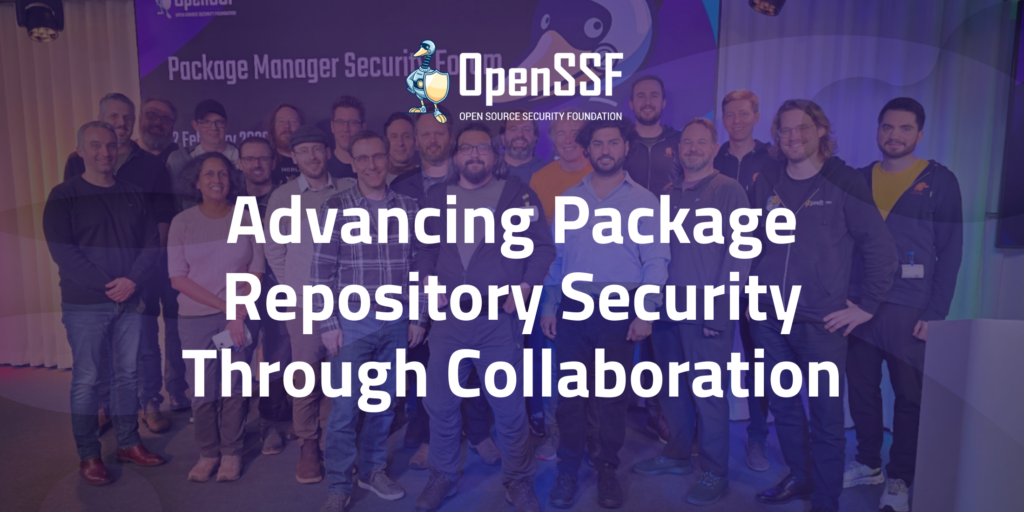 On February 2, OpenSSF convened the Package Manager Security Forum, bringing together maintainers and registry operators from major ecosystems to address shared challenges in package repository security. Discussions highlighted common concerns around identity and account security, governance and abuse handling, transparency, and long-term sustainability. The session reinforced that package ecosystem risks are interconnected and that improving security requires cross-ecosystem coordination, shared frameworks, and continued collaboration through OpenSSF’s neutral convening role.
 Is your open source project meeting the “minimum definition” of security? The OpenSSF has officially integrated the
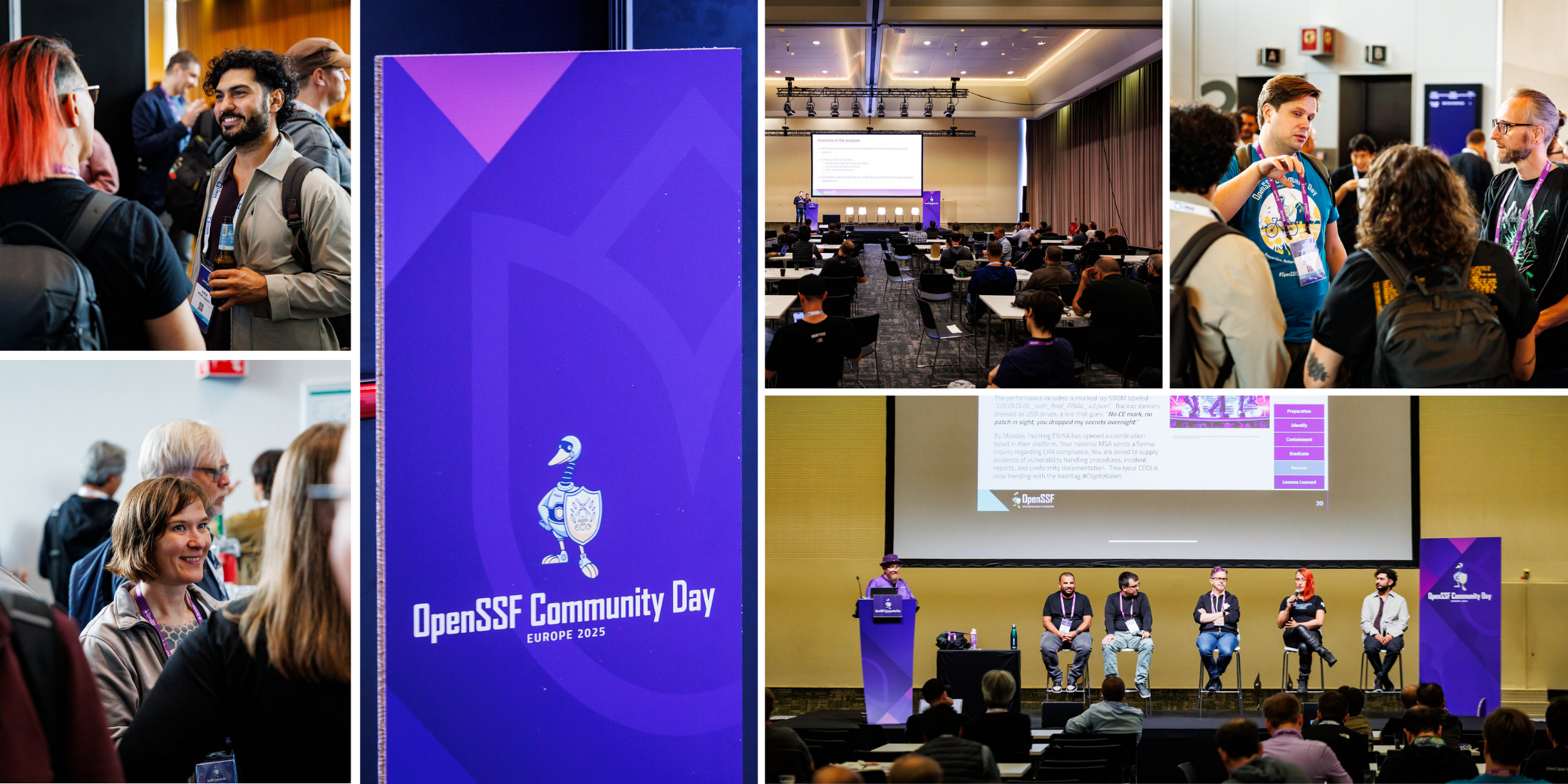 From August 25–28, 2025, the Linux Foundation hosted
 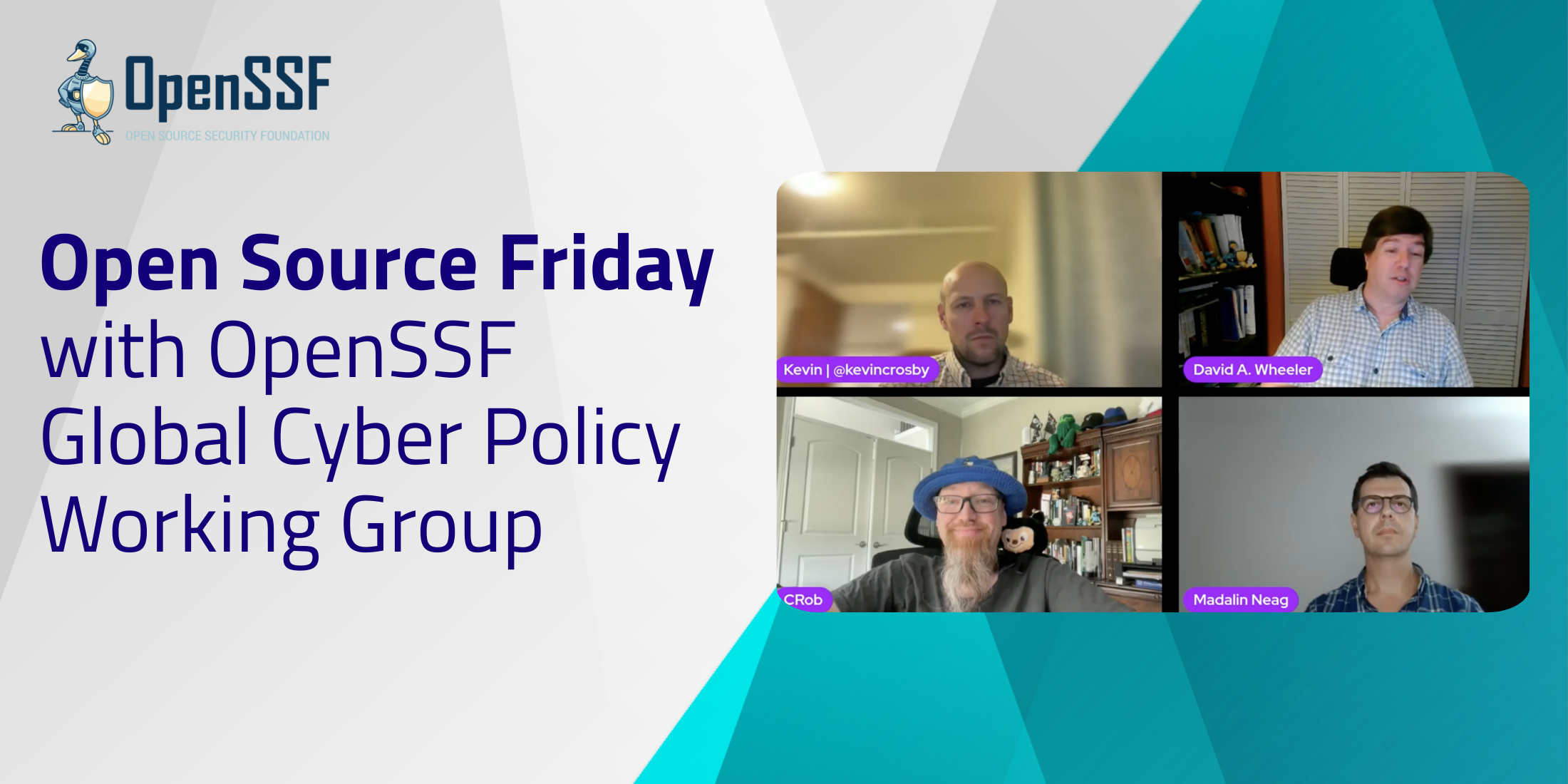 On August 15, 2025,
  GUAC and Trustify are combining under the GUAC umbrella to tackle the challenges of consuming, processing, and utilizing supply chain security metadata at scale. With Red Hat’s contribution of Trustify, the unified community will serve as the central hub within OpenSSF for building and using supply chain knowledge graphs, defining standards, developing shared infrastructure, and fostering collaboration.
 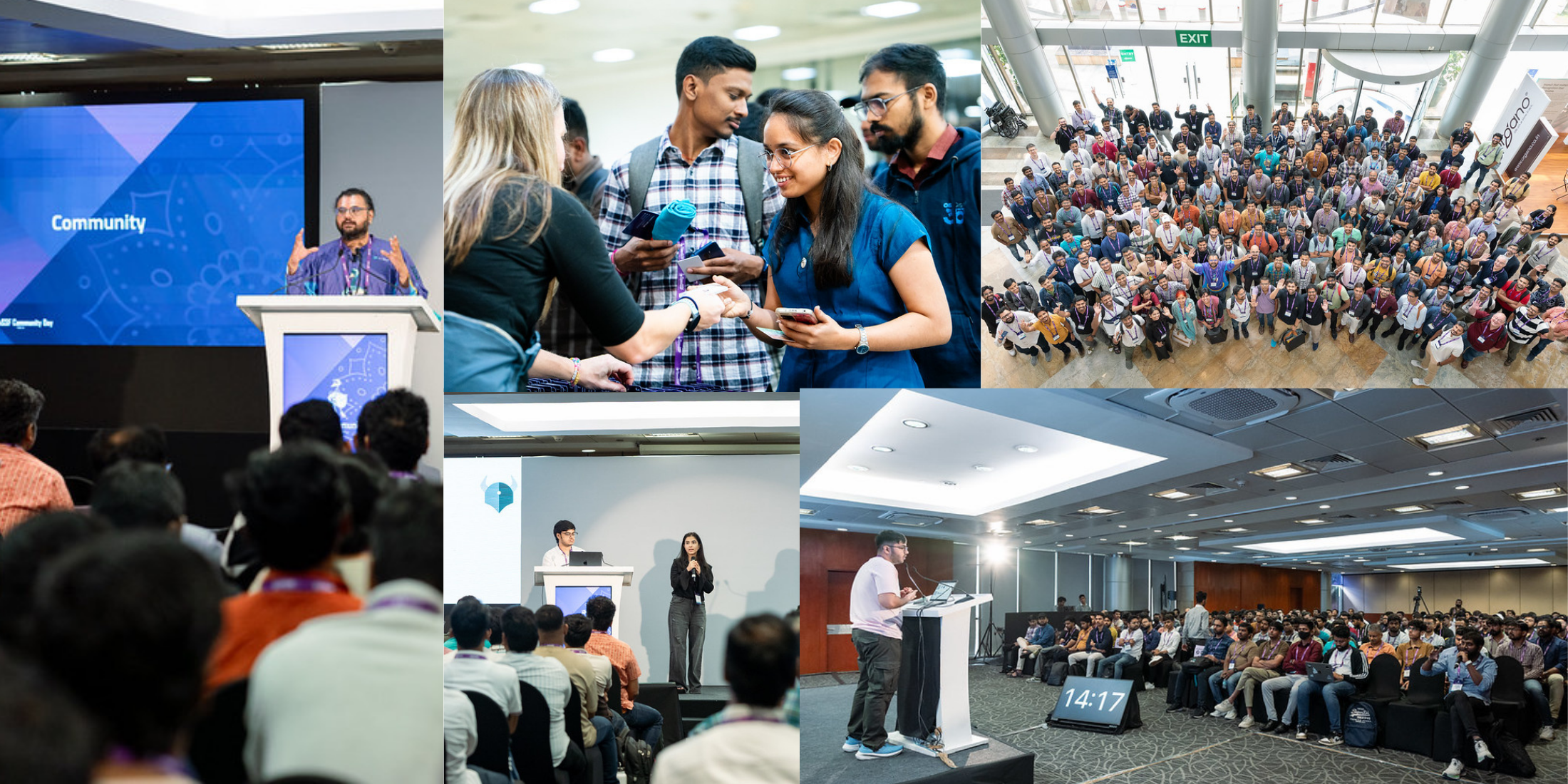 On August 4, 2025, OpenSSF hosted its second Community Day India in Hyderabad, co-located with KubeCon India. With 232 registrants and standing-room-only attendance, the event brought together open source enthusiasts, security experts, engineers, and students for a full day of learning, collaboration, and networking.
 Public package registries and other shared services power modern software at global scale, but most costs are carried by a few stewards while commercial-scale users often contribute little. Our new open letter calls for practical models that align usage with responsibility — through partnerships, tiered access, and value-add options — so these systems remain strong, secure, and open to all.