
The 2026 OpenSSF Community Day North America agenda is live, and we invite the open source community to join us on Thursday, May 21, in Minneapolis, MN. Co-located with Open…
Read More
Welcome to the January 2026 edition of the OpenSSF Newsletter. This issue highlights new research, community priorities, and upcoming events across the open source security ecosystem.
📊 2026 Cyber Resiliency Survey → Measure the awareness of CRA
🧭 OpenSSF 2026 Themes → What’s ahead and how to get involved
🔎 OSS Africa, VEX, AI & OSPS Baseline → Practical blogs and podcast highlights
🌍 Events & Community → GVIP Summit, EU Policy Summit, FOSDEM, Open Source SecurityCon Europe, CFPs, and project updates
 As cybersecurity legislation such as the EU Cyber Resilience Act (CRA) takes effect, open source communities are beginning to feel its impact, from maintainers and contributors to organizations that rely on open source every day. Building on last year’s inaugural study, Linux Foundation Research and OpenSSF are again inviting the community to share perspectives through a new survey focused on awareness and readiness for cybersecurity regulation.
Your perspective matters. By participating, you help strengthen shared understanding, surface real community needs, and support the open source ecosystem as it navigates emerging regulatory challenges. Take the Survey.
OpenSSF is heading to Brussels for FOSDEM 2026 and Open Source Week, building on last year’s momentum around practical open source security, CRA readiness, and community-driven solutions. Expect strong presence across policy and technical devrooms, a joint booth with Linux Foundation Europe (K2-A-03), and active participation in key events like the GVIP Summit and EU Open Source Policy Summit. The focus this year: turning regulation and security best practices into real, usable tooling and guidance for maintainers and projects. Read the blog.
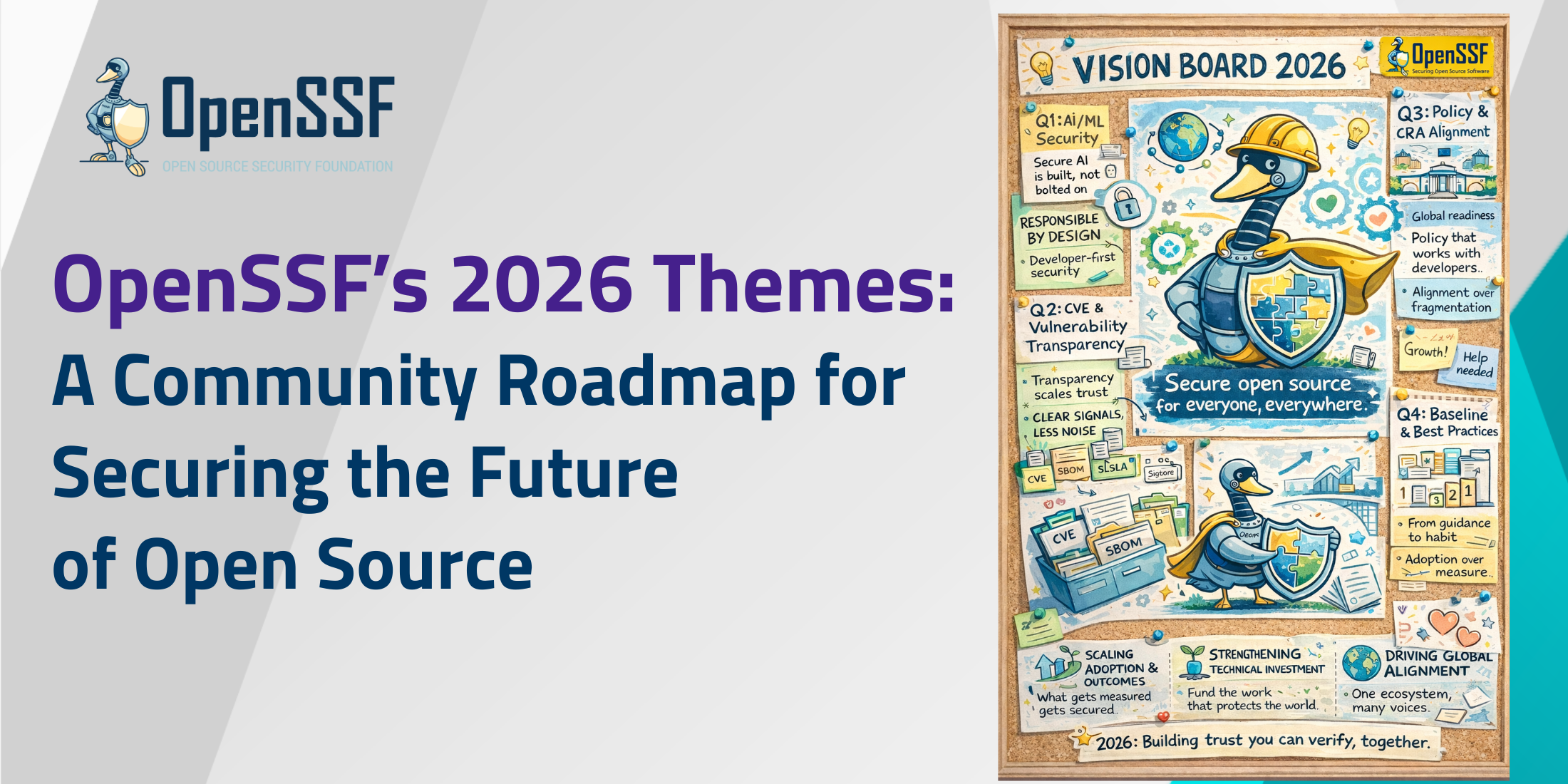 Curious about what security topics will shape the open source world in 2026 and how you can be part of it? Read about OpenSSF’s quarterly themes from AI and ML security to vulnerability transparency, global policy alignment, and Baseline adoption. This blog also highlights key events, community activities, and how to get involved. Read more.
Key stakeholders, Aubrey Olandt (Red Hat), Brandon Lum (Google), Charl de Nysschen (Google), Christoph Plutte (Ericsson), Georg Kunz (Ericsson), Jonathan Douglas (Microsoft), Jautau “Jay” White (Microsoft), Martin Prpič (Red Hat), and Rao Lakkakula (Microsoft) look at how VEX is developing across the software industry. VEX provides structured, machine-readable statements about whether a vulnerability affects a product. It can reduce false positives and cut down the workload for security teams, but adoption is still uneven. This report reviews the main VEX formats CSAF, OpenVEX, CycloneDX, and SPDX and highlights gaps in tooling, trust, and distribution. Read more.
In this guest blog from Trail of Bits, learn how transparency logs like Rekor, combined with tools such as rekor-monitor, help package maintainers spot tampering and unauthorized signatures in real time. With support from OpenSSF, new improvements make monitoring easier, more reliable, and ready for production, an important step toward securing the open source software supply chain.
Read the full blog to see how transparency logs work, why they matter, and what’s coming next.
How is AI really changing software development today? In “AI, Software Development, Security, Tips, and the Future (Part 1)”, David A. Wheeler notes that AI use during software development has become the norm because “productivity is king,” even though AI-generated results are frequently wrong, and discusses the security risks around development environments and insecure generated code. In Part 2, he continues by offering practical tips on how developers can better use AI, touches on licensing and “vibe coding,” and looks toward the future, explaining that AI won’t replace developers anytime soon, but will increase both attack and defense capabilities in software security. If you haven’t read both blogs yet, they provide a clear, realistic view of how AI is affecting software today and what developers should be thinking about next.
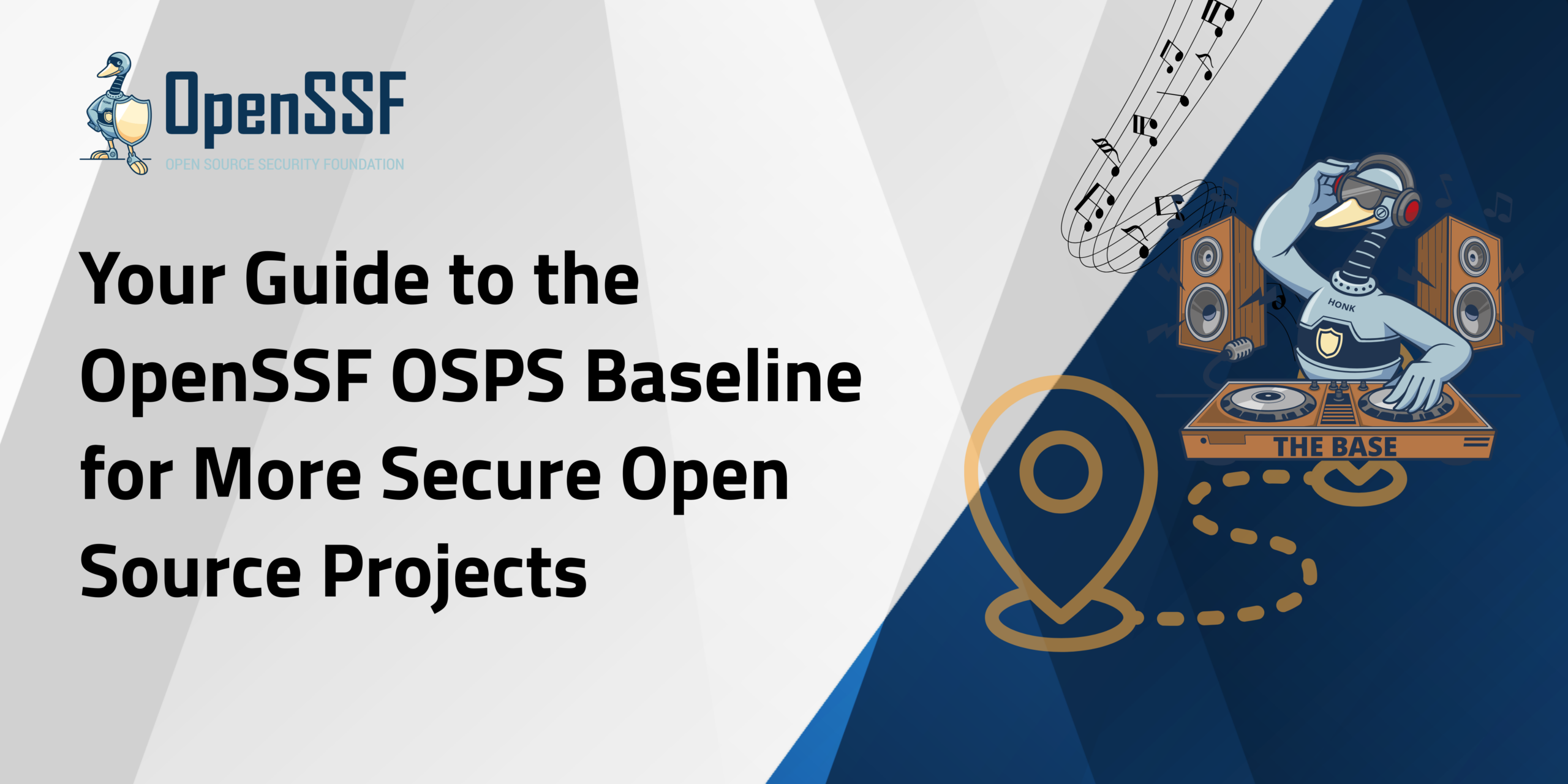 What does good security actually look like for open source projects? This new blog walks through the community-developed OSPS Baseline, a catalog of practical security controls that helps projects understand expectations, improve over time, and meet users where they are. With FOSS in up to 96% of modern codebases and relied on across nearly every industry, the blog explains why shared security practices matter and how the Baseline connects to standards like NIST SSDF, the EU Cyber Resilience Act, and ISO 27001. It also links to keynotes, a tech talk, a podcast, a real project case study, and FAQs so you can see how the Baseline works in practice. Read the blog.
How does it feel to represent a global open source security community across Europe? In his blog, Madalin Neag reflects on attending key open source, cybersecurity, and standardization meetings on behalf of OpenSSF throughout 2025. He describes how each conference badge represents conversations, collaboration, and the growing understanding that open source security is becoming an essential part of Europe’s cybersecurity future. The blog highlights the connections formed between maintainers, policymakers, standards groups, and community leaders, and shows how work in open source security bridges policy and practice across many different environments. Read more.
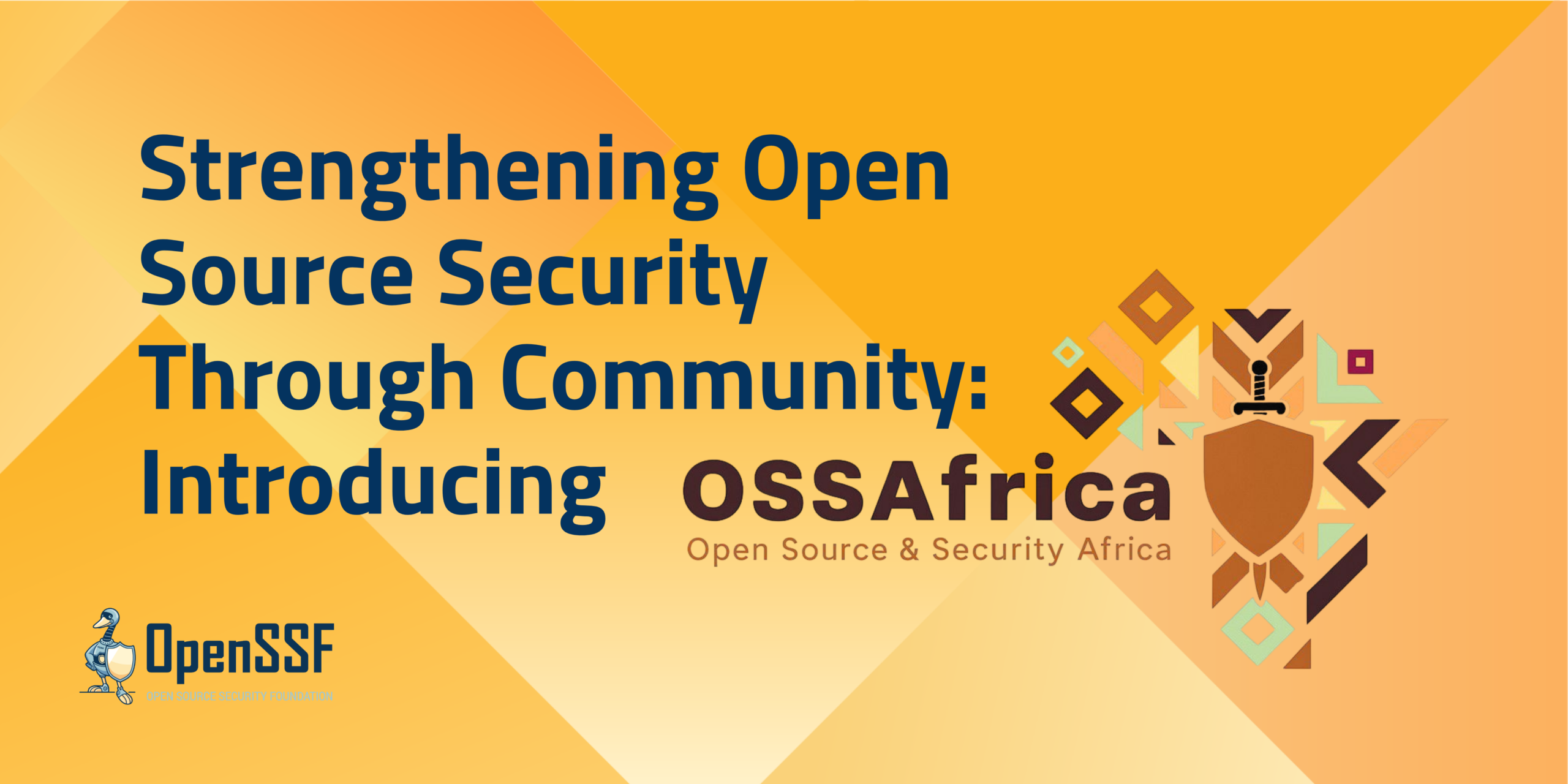 OSSAfrica is a new community-led initiative working to strengthen open source security across Africa by connecting contributors, maintainers, developers, and security practitioners. Operating as a Special Interest Group under the OpenSSF BEAR Working Group, OSSAfrica focuses on community building, security awareness, locally relevant solutions, and creating clear pathways for African contributors to engage in global open source security efforts. Learn why this work matters, what’s being built, and how you can get involved. Read the blog.
This blog looks at how voluntary security attestation models under the EU Cyber Resilience Act could unintentionally shift risk and responsibility onto open source developers. It argues that CRA compliance should stay focused on downstream manufacturers and rely on automation and verifiable security metadata rather than upstream attestations that could undermine open source sustainability.
#47 – S2E24 Teaching the Next Generation: Software Supply Chain Security in Academia with Justin Cappos
This episode goes inside academia with NYU’s Justin Cappos, who explains why universities struggle to teach software supply chain security and how his course is producing highly skilled professionals. He and Yesenia Yser talk about curriculum, real-world open source collaboration, and how the Linux Foundation’s Academic Computing Acceleration Program could reshape security education.
#48 – S2E25 2025 Year End Wrap Up: Celebrating 5 Years of Open Source Security Impact!
CRob and Yesenia close out the year with a special wrap-up celebrating OpenSSF’s fifth anniversary and a huge year in open source security. They look back at new free training courses, highlights from the DARPA AI Cyber Challenge, standout interviews, major projects such as, OSPS Baseline and AI model signing, and community conversations across SBOMs and supply chain security. With nearly 12,000 downloads and big plans for Season 3, this episode is a fun look at how far the community has come and what’s ahead in 2026.
#49 – S3E1 Why Marketing Matters in Open Source: Introducing Co-Host Sally Cooper
In this Season 3 premiere, What’s in the SOSS? welcomes Sally Cooper as an official co-host. Sally shares her path from technical training and documentation to marketing leadership at OpenSSF, and explains why marketing matters in open source communities. Joined by CRob and Yesenia Yser, the conversation explores personas, personal branding, trust, and how marketing helps great projects get discovered, supported, and sustained. The episode also offers a preview of OpenSSF’s 2026 marketing themes and practical ways for newcomers to get involved.
Connect with the OpenSSF Community at these key events:
There are a number of ways for individuals and organizations to participate in OpenSSF. Learn more here.
You’re invited to…
We want to get you the information you most want to see in your inbox. Missed our previous newsletters? Read here!
Have ideas or suggestions for next month’s newsletter about the OpenSSF? Let us know at marketing@openssf.org, and see you next month!
Regards,
The OpenSSF Team
Datadog, a leading cloud-scale observability and security platform, joined the Open Source Security Foundation (OpenSSF) as a Premier Member in July, 2024. With both executive leadership and deep technical involvement, Datadog has rapidly become a force in advancing secure open source practices across the industry.
GuardDog: Open Source Threat Detection
In early 2025, Datadog launched GuardDog, a Python-based open source tool that scans package ecosystems like npm, PyPI, and Go for signs of malicious behavior. GuardDog is backed by a publicly available threat dataset, giving developers and organizations real-time visibility into emerging supply chain risks.
This contribution directly supports OpenSSF’s mission to provide practical tools that harden open source ecosystems against common attack vectors—while promoting transparency and shared defense.
Datadog actively supports the open source security ecosystem through its engineering efforts, tooling contributions, and participation in the OpenSSF community:
These collaborations demonstrate Datadog’s investment in long-term, community-driven approaches to open source security.
Datadog takes the stage at OpenSSF Community Day North America on Thursday, June 26, 2025, in Denver, CO, co-located with Open Source Summit North America.
They’ll be presenting alongside Intel Labs in the session:
Talk Title: Harnessing In-toto Attestations for Security and Compliance With Next-gen Policies
Time: 3:10–3:30 PM MDT
Location: Bluebird Ballroom 3A
Speakers:
This session dives into the evolution of the in-toto Attestation Framework, spotlighting new policy standards that make it easier for consumers and auditors to derive meaningful insights from authenticated metadata—such as SBOMs and SLSA Build Provenance. Attendees will see how the latest policy framework bridges gaps in compatibility and usability with a flexible, real-world-ready approach to securing complex software supply chains.
Register now and connect with Datadog, Intel Labs, and fellow open source security leaders in Denver.
By contributing to secure development frameworks, creating open source tooling, and educating the broader community, Datadog exemplifies what it means to be an OpenSSF Premier Member. Their work is hands-on, standards-driven, and deeply collaborative—helping make open source safer for everyone.
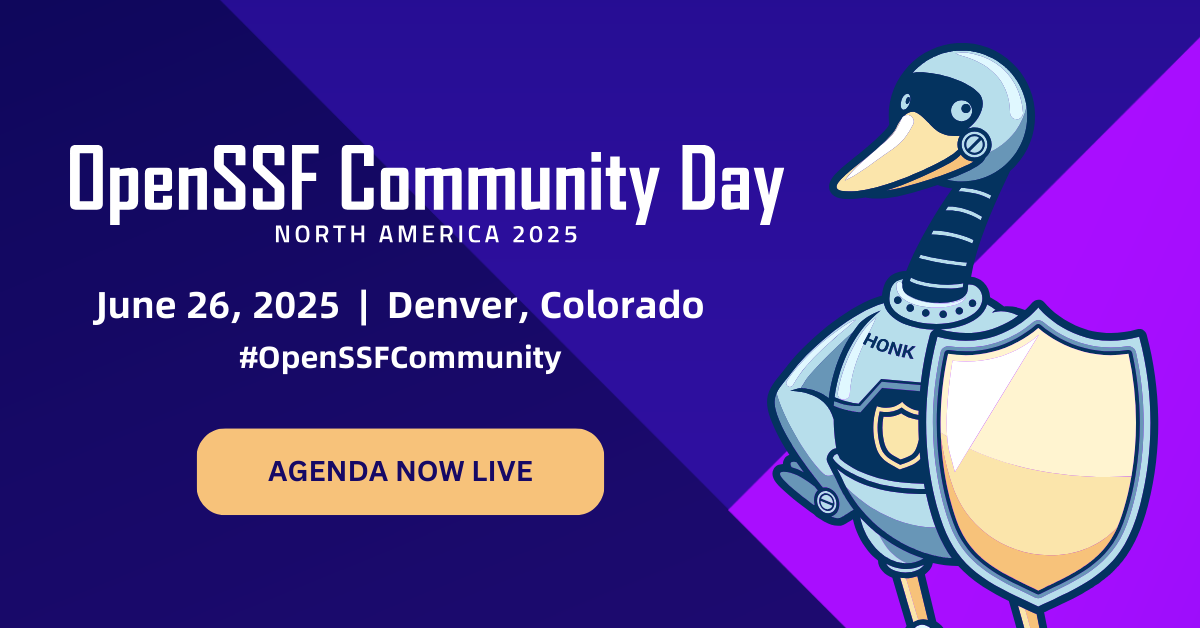
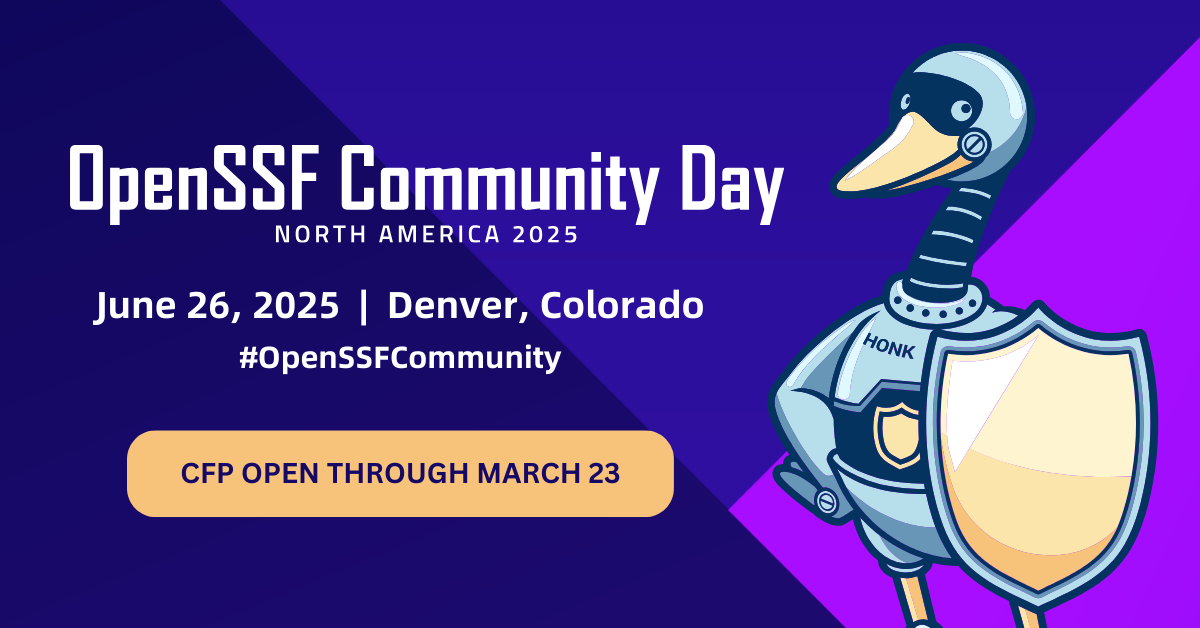
The Call for Proposals (CFP) for OpenSSF Community Day North America is officially open through March 23, 2025! Co-located with Open Source Summit North America, this event will bring the open source community together in Denver, Colorado, on June 26, 2025, for a full day of engaging discussions and presentations focused on securing the open source software (OSS) supply chain.
This is your opportunity to share your expertise and innovative ideas with the community! We’re looking for sessions on topics like:
*No product/vendor sales pitches — it’s a community-focused event!
For more information on the CFP, visit here. Submit your proposal today!
We have exciting opportunities available to showcase your support for securing the open source ecosystem. By sponsoring OpenSSF Community Day NA, you’ll gain visibility among key industry leaders, security experts, and the open source community. Join us in driving forward the mission to strengthen the OSS supply chain. Email us at openssfevents@linuxfoundation.org to reserve your sponsorship.
Don’t miss out on the opportunity to be part of this vital conversation. Whether you’re submitting a proposal, attending as a participant, or showcasing your support through sponsorship, OpenSSF Community Day NA is the place to connect, collaborate, and contribute to securing the open source software supply chain. We can’t wait to see you in Denver and work together to advance the future of OSS security!