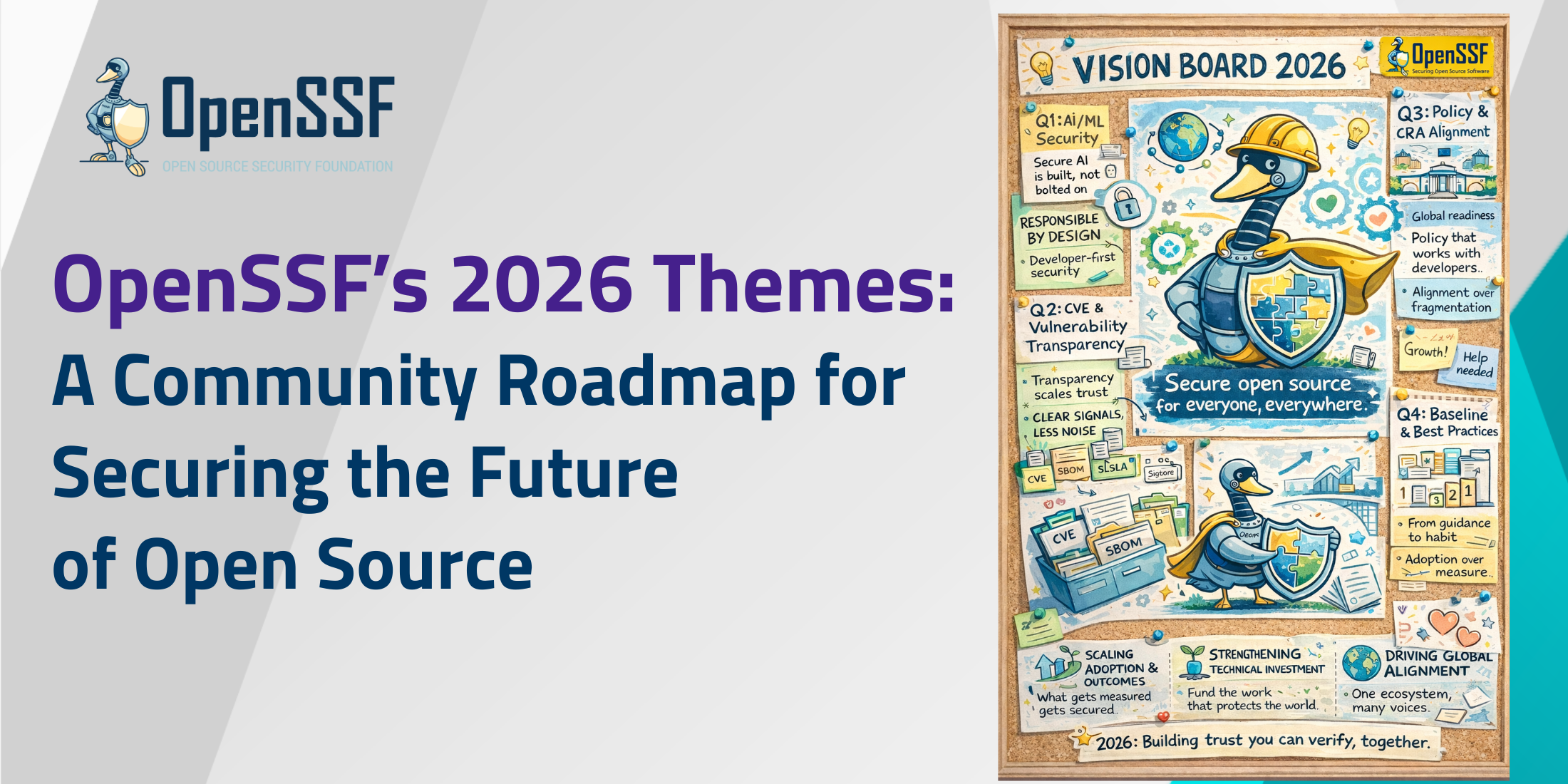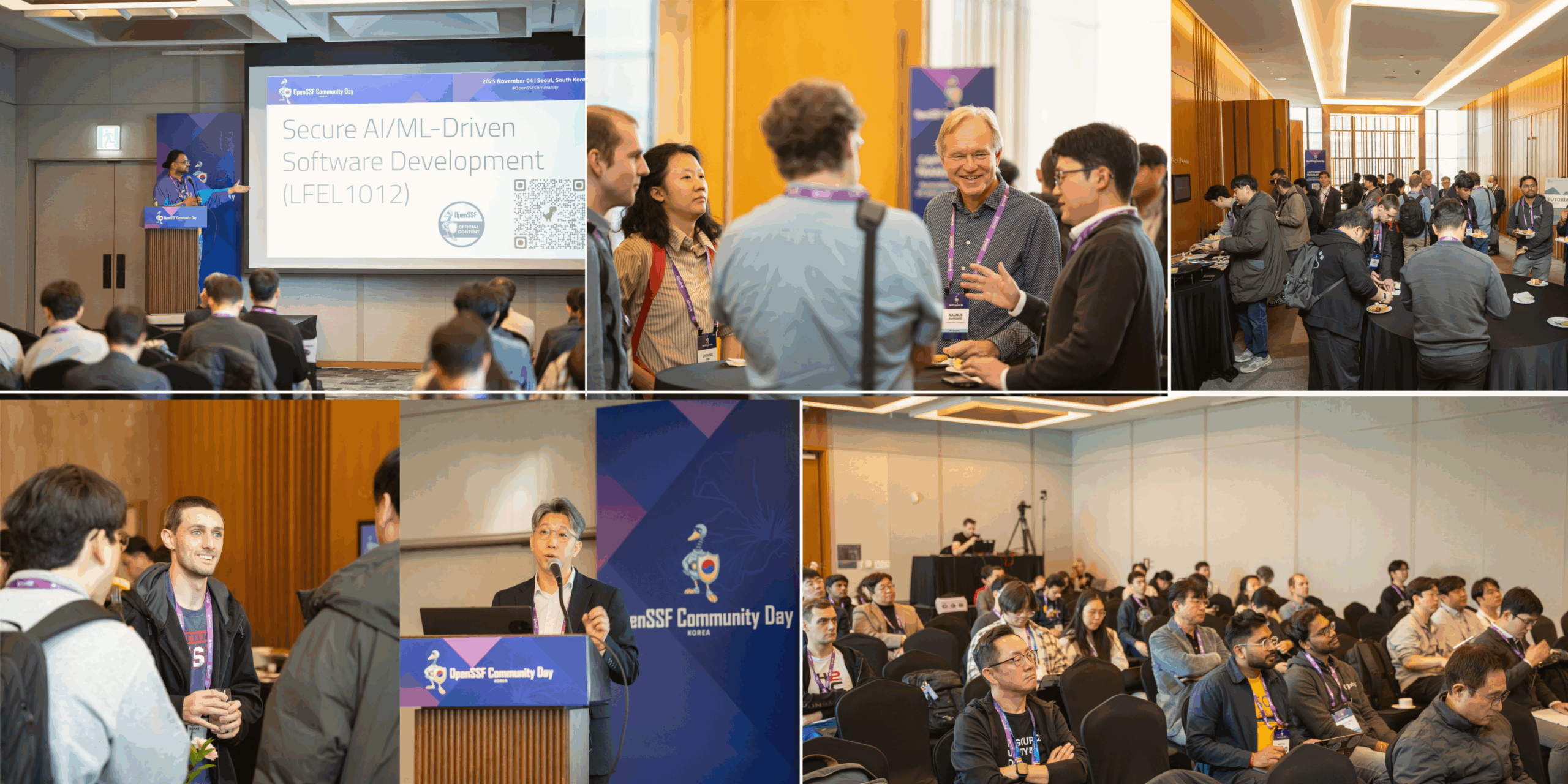
What a month! May was packed with milestones for the OpenSSF community, and we're still riding the high from an incredible OpenSSF Community Day North America in Minneapolis. Read OpenSSF…
Read More
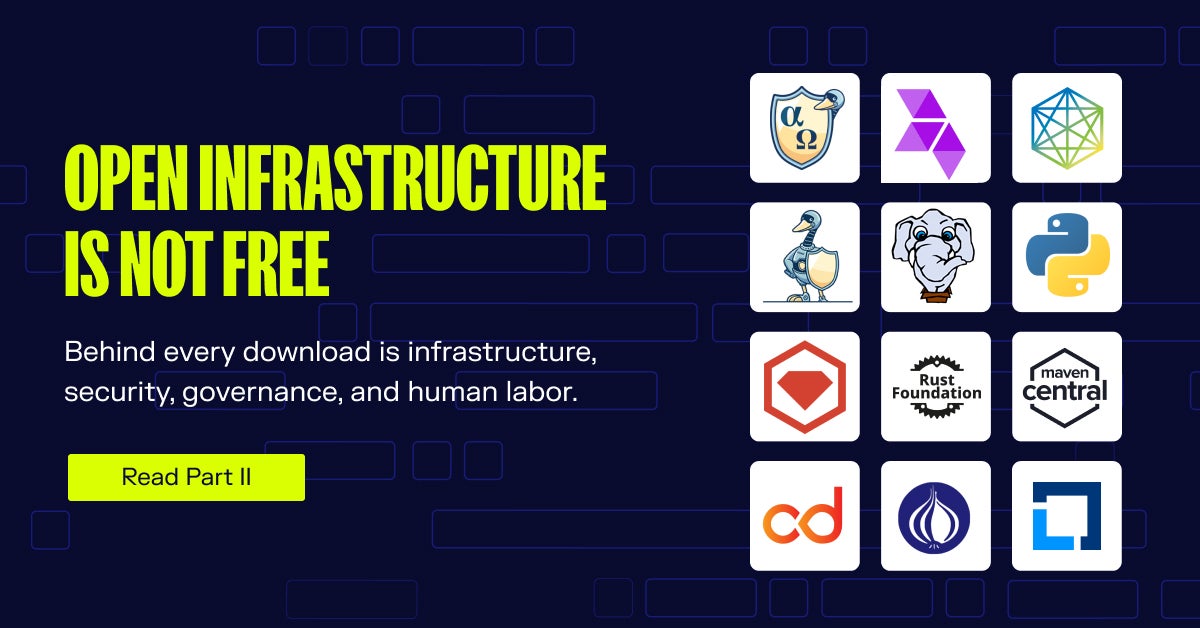
The September 2025 Working Together Towards Sustainable Open Source open letter raised the alarm about the economic sustainability of open source package registries, highlighting how rising adoption and the pace of innovation are placing new and growing pressures on open source package registries. Those pressures have only accelerated in the time since the letter, amplified by the adoption of AI coding agents and tools.
But what are the real economics of an open source package registry? Beyond obvious infrastructure costs, there’s significant, often invisible work required to keep registries running, maintained by a small number of staff and volunteers. It’s more than just uploads and downloads. It’s strengthening security as threats evolve, continuously improving the developer experience, and more.
To ensure long-term sustainability, the registries have formed a Sustaining Package Registries Working Group hosted by the Linux Foundation to collaborate on and share community-aligned strategies and offerings. The right set of strategies will vary by registry and evolve over time, and some registries have already rolled out new approaches.
Registries today run primarily on two things: (1) infrastructure donations and credits; and (2) heroic efforts from small paid teams (themselves funded by donations and grants) and unpaid volunteers that operate and maintain registry services. The bulk of donations and grants comes graciously from a small set of donors who care about the value of package ecosystems, but even these donations don’t scale with demands on the registries.
The core job of a registry is to accept packages from open source publishers and make them available for consumers to download: simple in concept, demanding in practice. We expand on the behind-the-scenes jobs below.
For a sense of scale, the registries – npm, Maven Central, PyPI, Crates.io, RubyGems, Open VSX, Packagist, Hex, CPAN and more than a dozen others – will serve over 10 trillion open source package downloads in 2026 as the headwaters of the world’s software supply chains.
That’s more than one billion downloads per hour or just under double the predicted number of Google searches that will be run in 2026.
That 10 trillion number is incomprehensibly large but believable. Modern applications contain not just some open source but hundreds of dependencies often spanning language ecosystems, e.g., your Python package manager may be written in Rust, or the continuous integration system for your Java application may be written in Ruby.
The consumption side of the registry ecosystem – those 10 trillion downloads – is part of the pressure on sustainability, and it’s tempting to look at a “click charge” as part of the solution.
Nonetheless, the scale of adoption and commercial use places a significant infrastructure and human load on the registries to the tune of millions of dollars per year of CDN, infrastructure, and labor.
Beyond adoption driving downloads, AI is another scale driver, amplifying both legitimate and malicious activity. AI is accelerating the rate of consumption and production of open source, pushing registry management beyond the scale of human action or oversight. (The difference between Python’s 2025 report and 2026 trajectory is striking: PyPI added 130,000 new packages in 2025, nearly matching its total of 140,000 in 2018, and the registry is adding nearly 900 packages per day in 2026.)
Registries also play a front-line role in supply chain security, keeping malware and vulnerabilities from entering the open source ecosystem, and the “good guys” aren’t the only ones using AI.
Attackers are using AI to create and ship more novel, more difficult-to-detect attacks more quickly. The community is still in the thick of Shai-Hulud and other recent supply chain attacks like the ones on Trivy and LiteLLM, and even more recently, the Axios compromise, which demonstrated how AI and social engineering are converging. But going back to 2021, where we can get a full picture of the end-to-end cost of a significant vulnerability, remediating the log4shell (CVE-2021-44228) vulnerability consumed around 10% of a year’s enterprise security effort across the industry.
With some background on scale and AI drivers, let’s dive into the high-level jobs to be done by a registry, and it’s a long list. No registry does all of these jobs in depth today. Depending on scale, some jobs require fractional or sporadic attention while others, like site reliability engineering, might require a team.
With massive traffic, a mountain of hard work to do, supply chain attackers at the gates, and a mission to keep access for individuals open and free, the registries need funding and paid services or models that scale with the demands. The way to get there is to bring commercial users and ecosystem stakeholders to the table as paying customers.
The Sustaining Package Registries Working Group is bringing registry leaders together to define what sustainable operation looks like across funding, operations, and transparency.
Now the ecosystem needs to meet that moment. The companies that depend on these systems must help sustain them so the next generation of software can be built on infrastructure that is not just open, but resilient.
Alpha-Omega
Continuous Delivery Foundation (CDF)
Eclipse Foundation (OpenVSX)
OpenJS Foundation
Open Source Security Foundation (OpenSSF)
Linux Foundation
Packagist (Composer)
Perl and Raku Foundation
Python Software Foundation (PyPI)
Ruby Central (RubyGems)
Rust Foundation (crates.io)
Sonatype (Maven Central)
Securing the open source software that underlies our digital infrastructure is a persistent and complex challenge that continues to evolve. The Linux Foundation announced a $12.5 million collective investment to be managed by Alpha-Omega and The Open Source Security Foundation (OpenSSF). This funding comes from key partners including Anthropic, Amazon Web Services (AWS), Google, Google DeepMind, GitHub, Microsoft, and OpenAI. The goal is to strengthen the security, resilience, and long-term sustainability of the open source ecosystem worldwide.
This new investment provides critical support for OpenSSF’s proven, maintainer-centric initiatives. Targeted financial support is a key catalyst for sustained improvement in open source security. The results of the OpenSSF’s collective work in 2025 are clear:
The security landscape is changing fast. Artificial intelligence (AI) accelerates both software development and the discovery of vulnerabilities, which creates new demands on maintainers and security teams. However, OpenSSF recognizes that grant funding alone is not the sole solution to the problems AI tools are causing today on open source security teams. This moment also offers powerful new opportunities to improve how security work is completed.
This new funding will help the OpenSSF provide the active resources and dedicated projects needed to support overworked maintainers with the triage and processing of the increased AI-generated security reports they are currently receiving. Our response will feature global strategies tailored to the needs of maintainers and their communities.
“Open source software now underpins the majority of modern software systems, which means the security of that ecosystem affects nearly every organization and user worldwide,” said Christopher Robinson, CTO and Chief Security Architect at OpenSSF. “Investments like this allow the community to focus on what matters most: empowering maintainers, strengthening security practices across projects, and raising the overall security bar for the global software supply chain.”
The true measure of success will be execution. Success is not about how much AI we introduce into open source. It is determined by whether maintainers can use it to reduce risk, remediate serious vulnerabilities faster, and strengthen the software supply chain long term. We are grateful to our funding partners for their commitment to this work, and we look forward to continuing it alongside the maintainers and communities that power the world’s digital systems.
“Our commitment remains focused: to sustainably secure the entire lifecycle of open source software,” said Steve Fernandez, General Manager of OpenSSF. “By directly empowering the maintainers, we have an extraordinary opportunity to ensure that those at the front lines of software security have the tools and standards to take preventative measures to stay ahead of issues and build a more resilient ecosystem for everyone.”
To learn more about open source security initiatives at the Linux Foundation, please visit openssf.org and alpha-omega.dev.
Anthropic, Amazon Web Services (AWS), GitHub, Google, Google DeepMind, Microsoft, and OpenAI Join Forces with the Foundation to Invest in Sustainable Security Solutions for the Open Source Ecosystem
SAN FRANCISCO – March 17, 2026 – The Linux Foundation, the nonprofit organization enabling mass innovation through open source, today announced $12.5 million in total grants from Anthropic, AWS, GitHub, Google, Google DeepMind, Microsoft, and OpenAI to strengthen the security of the open source software ecosystem. The funding will be managed by Alpha-Omega and the Open Source Security Foundation (OpenSSF), trusted security initiatives within the Linux Foundation, to develop long-term, sustainable security solutions that support open source communities worldwide.
As the security landscape grows more complex, advances in AI are dramatically increasing the speed and scale of vulnerability discovery in open source software. Maintainers are now facing an unprecedented influx of security findings, many of which are generated by automated systems, without the resources or tooling needed to triage and remediate them effectively. Through this investment, Alpha-Omega and OpenSSF will work directly with maintainers and their communities to make emerging security capabilities accessible, practical, and aligned with existing project workflows. The effort will support sustainable strategies that help maintainers manage growing security demands while improving the overall resilience of the open source ecosystem.
“Alpha-Omega was built on the idea that open source security should be both normal and achievable. By funding audits and embedding security experts directly into the ecosystem, we’ve proven that targeted investment works,” said Michael Winser, Co-Founder of Alpha-Omega. “Now, we’re scaling that expertise. We are excited to bring maintainer-centric AI security assistance to the hundreds of thousands of projects that power our world.”
“Grant funding alone is not going to help solve the problem that AI tools are causing today on open source security teams,” said Greg Kroah-Hartman of the Linux kernel project. “OpenSSF has the active resources needed to support numerous projects that will help these overworked maintainers with the triage and processing of the increased AI-generated security reports they are currently receiving.”
“Our commitment remains focused: to sustainably secure the entire lifecycle of open source software,” said Steve Fernandez, General Manager of OpenSSF. “By directly empowering the maintainers, we have an extraordinary opportunity to ensure that those at the front lines of software security have the tools and standards to take preventative measures to stay ahead of issues and build a more resilient ecosystem for everyone.”
To learn more about open source security initiatives at the Linux Foundation, please visit openssf.org and alpha-omega.dev.
“The open source ecosystem underpins nearly every software system in the world, and its security can’t be taken for granted. This investment reflects our belief that the best way to improve security outcomes is to work directly with maintainers and give them the resources and tooling to address threats at scale. Ensuring the world safely navigates the transition to transformative AI means investing in the foundations it runs on.”
– Vitaly Gudanets, CISO, Anthropic
“Over the past four years, our work with Alpha-Omega has proven it can deliver real results for the open source ecosystem at scale—from helping the Rust Foundation deploy Trusted Publishing to enabling critical vulnerability fixes across Node.js and PyPI. We are excited to increase our investment in Alpha-Omega and to work with our collaborators and directly with maintainers to provide not just funding, but the right tools and expertise that projects actually need to handle AI-generated security reports at scale.”
— Mark Ryland, Director, AWS Security
“Building on our initial commitment alongside Google and Microsoft four years ago, we’re now confronting new security challenges as AI transforms vulnerability discovery. That’s why AWS is investing an additional $2.5 million in Alpha-Omega. We believe the same advanced models creating these challenges can also solve them through better tooling and automation, but only through collaboration between industry leaders and the open source security community.”
— Stormy Peters, Head of Open Source Strategy and Marketing, Amazon Web Services
“As the home for open source, GitHub knows that code is only as strong as the community behind it. Supporting the Linux Foundation’s Alpha-Omega initiative extends our longstanding commitment to securing the global software supply chain. Through funding, training, and AI-powered tools, we’re empowering maintainers to identify risks faster and prevent burnout.”
— Kyle Daigle, COO, GitHub
“Securing the open source ecosystem is a shared responsibility that requires more than just capital, it also requires giving maintainers the right tools to stay ahead of evolving threats. By combining AI-driven innovation with the proven frameworks of Alpha-Omega and OpenSSF, we are empowering the community to not just react to threats, but build systemic resilience.”
— Evan Kotsovinos, Vice President of Privacy, Safety and Security, Google
“Securing open source is a shared responsibility, and we have to move as fast as the technology does. We’re focused on turning AI’s ability to find and patch vulnerabilities into a massive defensive advantage. Supporting Alpha-Omega and OpenSSF is an important step for us, right alongside our work on OSS-Fuzz, Big Sleep and CodeMender. We’re going to keep building on this to put these capabilities into the hands of maintainers, leveraging AI to help scale society’s collective resistance to cyber attacks.”
— Four Flynn, VP, Security and Privacy, Google DeepMind
“Open source software is a critical part of the modern technology landscape. As AI accelerates both software development and the discovery of vulnerabilities, the industry must step up to protect this shared infrastructure. This collaboration represents an important step in democratizing AI-powered defenses, and we’re proud to support Alpha-Omega and the OpenSSF in delivering scalable, maintainer-first solutions that secure the code powering our digital society.”
— Mark Russinovich, CTO, Deputy CISO and Technical Fellow, Microsoft Azure
“This is a critical moment for global cybersecurity that requires unprecedented levels of collaboration across the industry, and sustained commitment. For artificial intelligence to benefit us all, we need to listen closely to maintainers and strengthen the open source foundations we all depend on. Maintainers make an extraordinary contribution, and this program is an important step in providing them the support they need.”
— Dane Stuckey, CISO, OpenAI
Alpha-Omega protects society by funding and catalyzing sustainable security across open source software. With over 70 grants totalling over $20M across major ecosystems, package registries, and individual projects, Alpha-Omega has an established track record of “turning money into security.” Backed by Anthropic, AWS, Citi, GitHub, Google, Google DeepMind, Microsoft, and OpenAI, Alpha-Omega partners with maintainers, security experts, and communities to invest where it can have the greatest impact. For more information, visit us at alpha-omega.dev.
The Open Source Security Foundation (OpenSSF) is a cross-industry organization at the Linux Foundation that brings together the industry’s most important open source security initiatives and the individuals and companies that support them. The OpenSSF is committed to collaboration and working both upstream and with existing communities to advance open source security for all. For more information, please visit us at openssf.org.
The Linux Foundation is the world’s leading home for collaboration on open source software, hardware, standards, and data. Linux Foundation projects, including Linux, Kubernetes, Model Context Protocol (MCP), OpenChain, OpenSearch, OpenSSF, OpenStack, PyTorch, Ray, RISC-V, SPDX and Zephyr, provide the foundation for global infrastructure. The Linux Foundation is focused on leveraging best practices and addressing the needs of contributors, users, and solution providers to create sustainable models for open collaboration. For more information, please visit us at linuxfoundation.org.
Media Contact
Grace Lucier
The Linux Foundation