

By Ejiro Oghenekome, OpenSSF BEAR Working Group
A Continent Waking Up to Open Source Security
Open source software is playing an important role in Africa’s digital growth. Across the continent, more organizations, developers, and communities are adopting open source to build technology and solve local challenges. As this adoption grows, it’s time to look beyond simply using open source and start paying equal attention to securing it. Building a stronger open source ecosystem means making security, sustainability, and long-term project health part of the conversation from the start.
Taking the Stage: Securing Africa’s Digital Infrastructure
Our session, titled “Securing Africa’s Digital Infrastructure: Cybersecurity Challenges and Opportunities in Emerging Markets,” opened with a simple question to the audience: “How many of you have heard of open source?”
A few people in the room raised their hands because they knew about open source; others didn’t, but most were interested in getting to know about this open source community that is focused on security. The response set the tone for everything that followed. We walked the audience through what open source means in practice, not just as a technical concept, but as a foundation for Africa’s security future. We introduced both OpenSSF, the global community of developers and security engineers working to secure the world’s open source software, and specifically to the OpenSSF African Special Interest Group (SIG).
The OpenSSF Africa SIG is a special interest group within the Open Source Security Foundation focused on growing African participation in open source security. It exists to make sure African contributors, maintainers, and organisations are represented in global conversations about securing the software supply chain, and to build local capacity through mentorship, knowledge sharing, and collaboration on OpenSSF projects. Much of this work connects to the BEAR (Belonging, Empowerment, Allyship, and Representation) Working Group, which helps communities put OpenSSF guidance into practice. Getting involved is open to everyone, from complete beginners to experienced practitioners.

Speaker on stage during the ‘Securing Africa’s Digital Infrastructure’ session
Tools, Standards, and Community
We broke down OpenSSF’s work into three pillars that resonated with the audience:
- Tools – Free, open source solutions like Sigstore (for verifying software hasn’t been tampered with) and OpenSSF Scorecard (for instant security health checks on open source projects), available to every developer regardless of location or budget.
- Standards – Best-practice frameworks that any project can adopt, enabling developers everywhere to build more secure software consistently.
- Community – Free security education through the Linux Foundation, with nearly 20,000 enrollments in 2025 alone.
The message was clear: the tools exist. The training is free. The global community is investing. What is needed now is greater African participation, not simply to increase representation, but because developers, security professionals, and learners across Africa bring unique perspectives on building secure software in diverse, resource-constrained, and rapidly growing digital ecosystems. Their experiences help shape security solutions that are practical, inclusive, and globally relevant.
Beyond the Stage: Meaningful Conversations at the Booth
After the session, the conversation didn’t stop; it moved to our booth. We met developers, security professionals, students, and community builders, all curious about what OpenSSF and OpenSSF Africa SIG are doing and how they could get involved.
We gave out stickers and flyers, answered questions, listened to perspectives, and had the kind of honest, grounded conversations that only happen when you bring a community together in person. Every interaction reminded us why physical events still matter. There is something about looking someone in the eye and saying, “This community is for you too,” that no online channel can fully replicate.
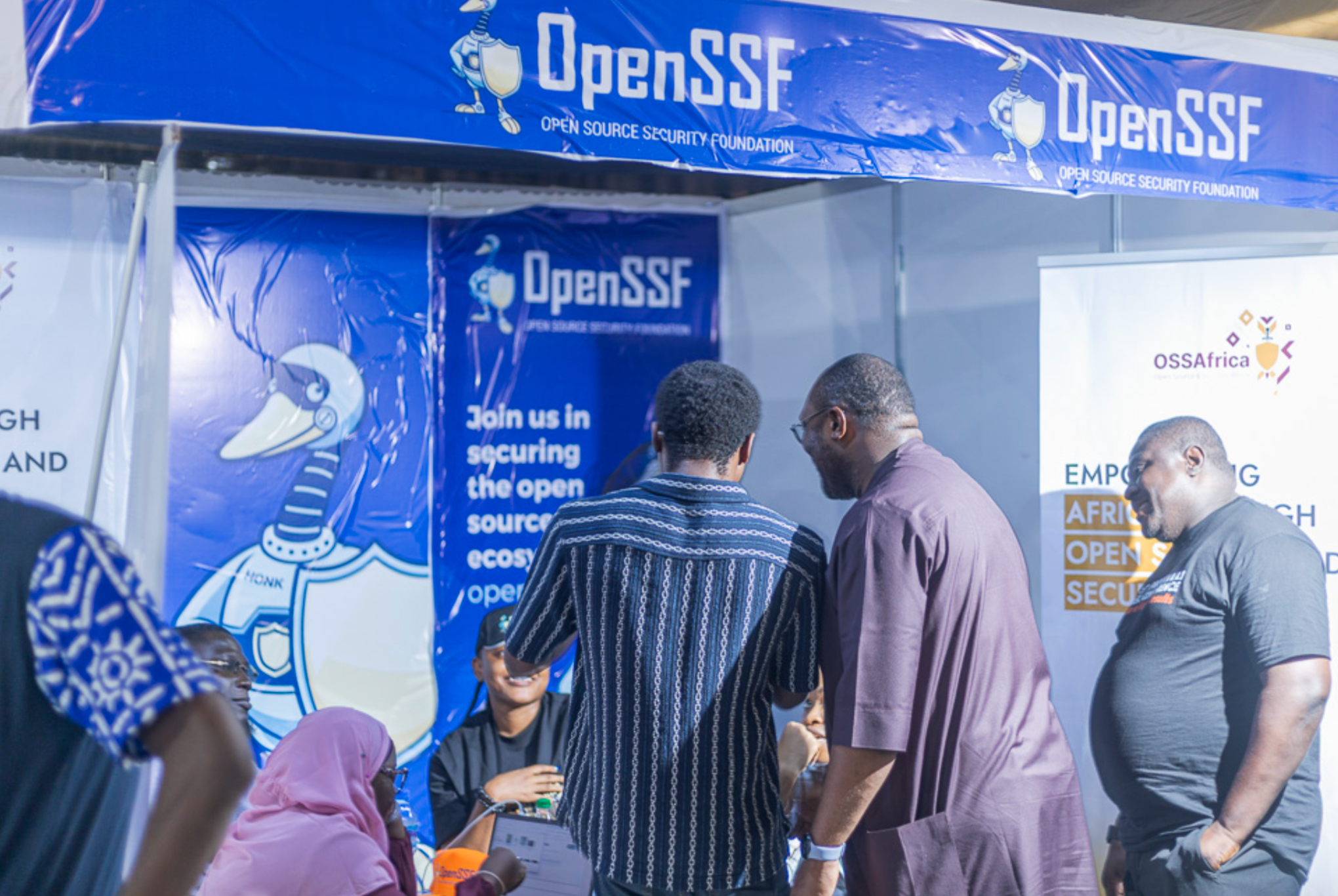
Team at the OpenSSF & OSSAfrica booth — conversations, stickers, and flyers
A Highlight: Connecting with the University of Lagos Cybersecurity Group
One of the most significant outcomes of our participation in AfricaCyberFest was a connection with a cybersecurity group at the University of Lagos. This wasn’t just an exchange of contact details; it opened a door.
We followed up and visited the group at the University of Lagos, where we introduced them to OpenSSF and OpenSSF Africa SIG, walked them through the tools and working groups, and shared how students and early-career security professionals can get meaningfully involved. The response was enthusiastic: about 7 people joined the community as a result of that visit, and we are now actively working together to build a structure that will ensure this growth is consistent and sustainable.
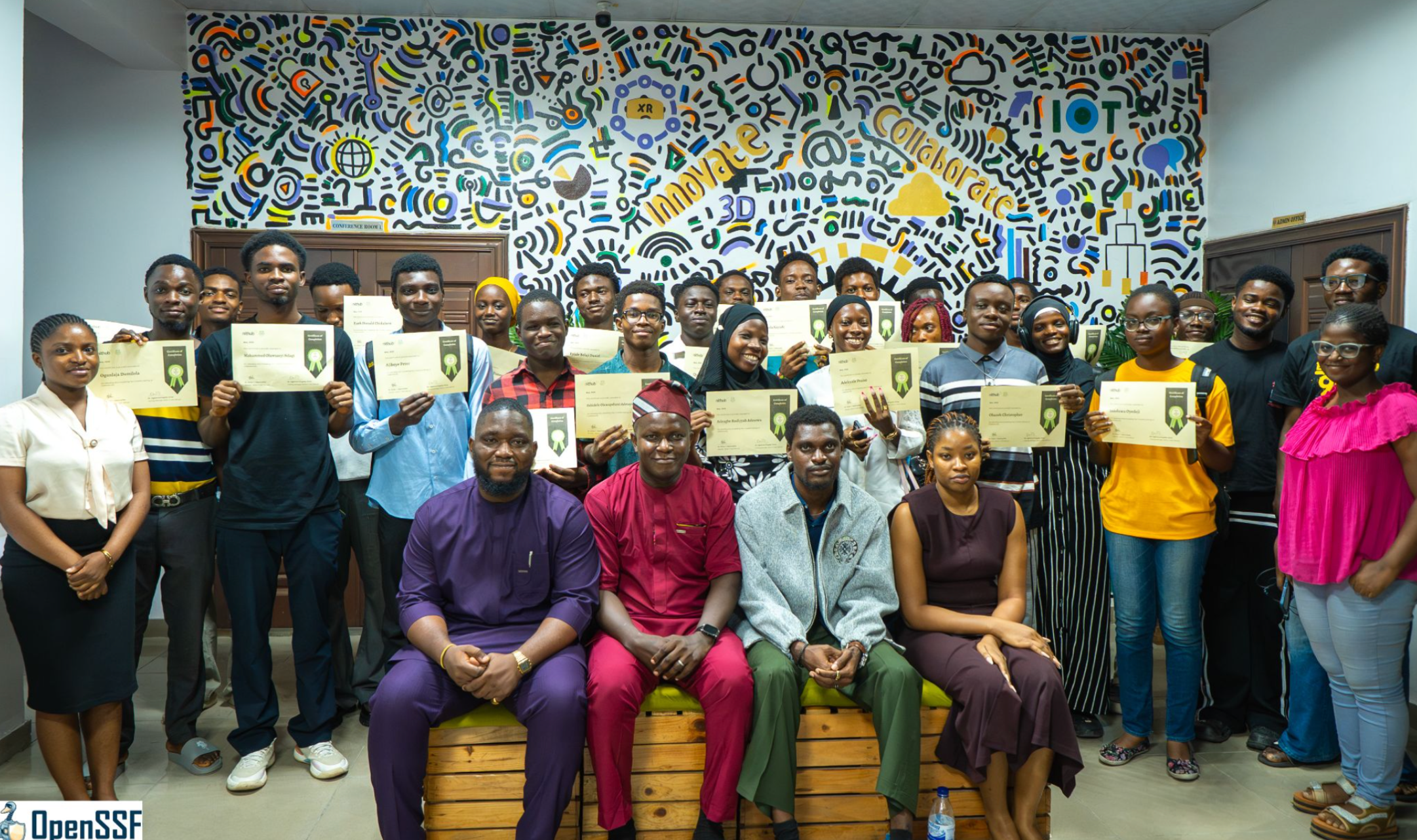
Team with the University of Lagos cybersecurity group
This connection represents exactly the kind of impact that shows up when you leave the stage and stay in the room. University communities are a critical entry point for growing the next generation of African open source security contributors, and we are committed to nurturing that pipeline.
What Comes Next
The event reinforced something we already believed: Africa is not on the sidelines of the global open source security conversation. We are in it, and the more intentionally we build community, the more meaningfully our voices will shape it.
OpenSSF Africa SIG is still forming, and this is an invitation. If you are a developer, a security professional, a student, or simply someone who cares about what Africa’s digital future looks like, now is the time to join.
Here is where to start:
- Explore OpenSSF (openssf.org) and join a working group.
- Connect with the Belonging, Empowerment, Allyship, and Representation (BEAR) Working Group and introduce yourself.
- Take a free OpenSSF course through the Linux Foundation and apply what you learn.
Start small. But start today.
About Author
 Ejiro Oghenekome is an emerging cybersecurity professional and researcher who’s turning curiosity into impact. With roots in UI/UX design and a growing body of work in software security, she brings an instinct for user-centred thinking to every technical challenge. Whether she’s breaking down secure coding practices for beginners or contributing to community documentation and tooling at OpenSSF, Ejiro makes security feel approachable. A consistent contributor across several open source projects, she’s part of a new wave of practitioners bridging design, education, and security across the African tech ecosystem and to the global community. Now focused on growing her career in cybersecurity, Ejiro is seeking roles where she can deepen her technical skills, contribute to real-world defences, and keep making security more accessible for everyone.