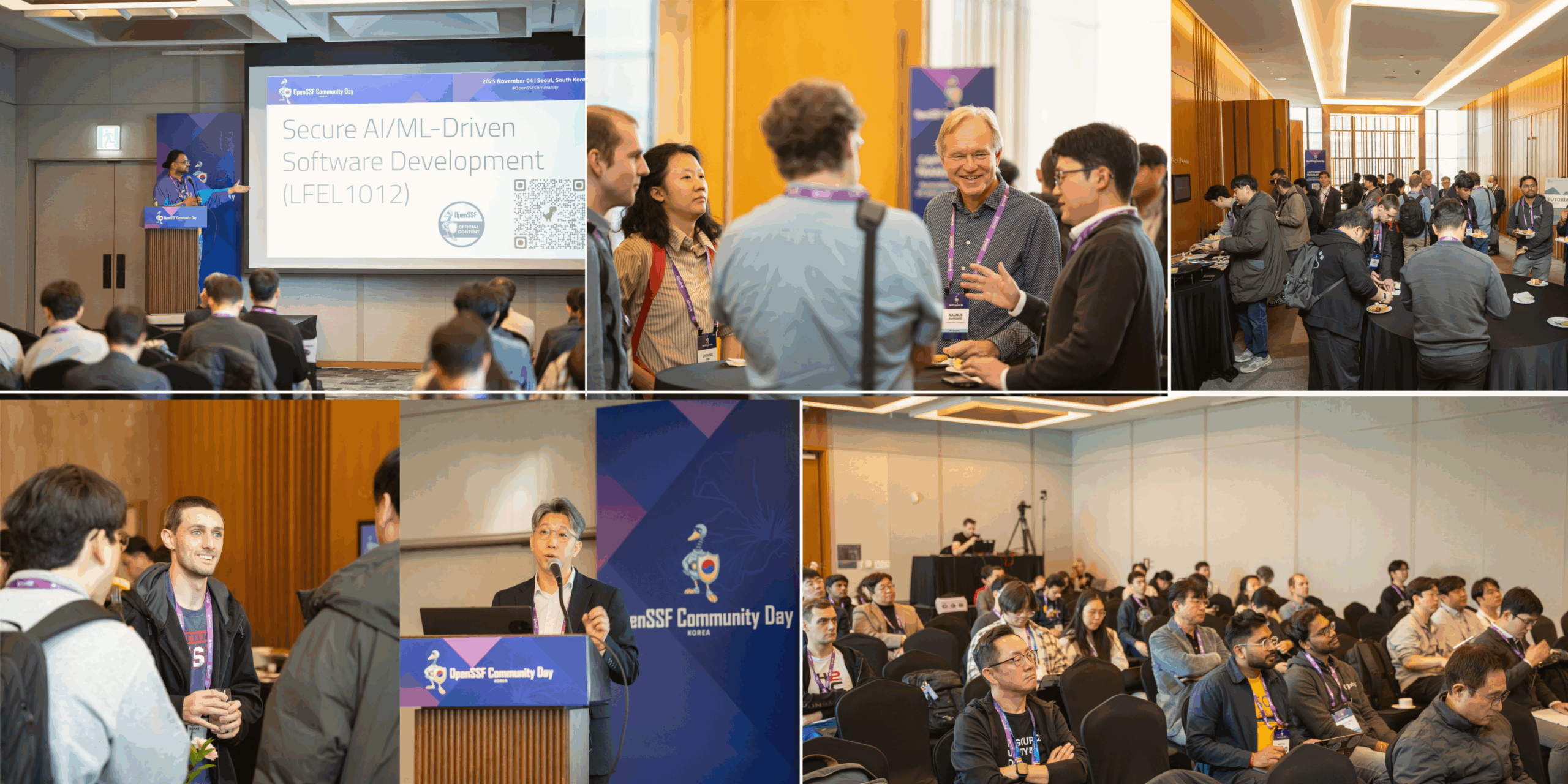
OpenSSF Community Day Korea took place on November 4, 2025, in Seoul, bringing developers and security engineers together for a day of practical discussions on software security.
Read More
Welcome to the November 2025 edition of the OpenSSF Newsletter! Here’s a roundup of the latest developments, key events, and upcoming opportunities in the Open Source Security community.
✅ Cyber week: Free + discounted security courses to level up fast
✅ EU CRA insights and OSS security guidance from Open Source Security Week in Belgium
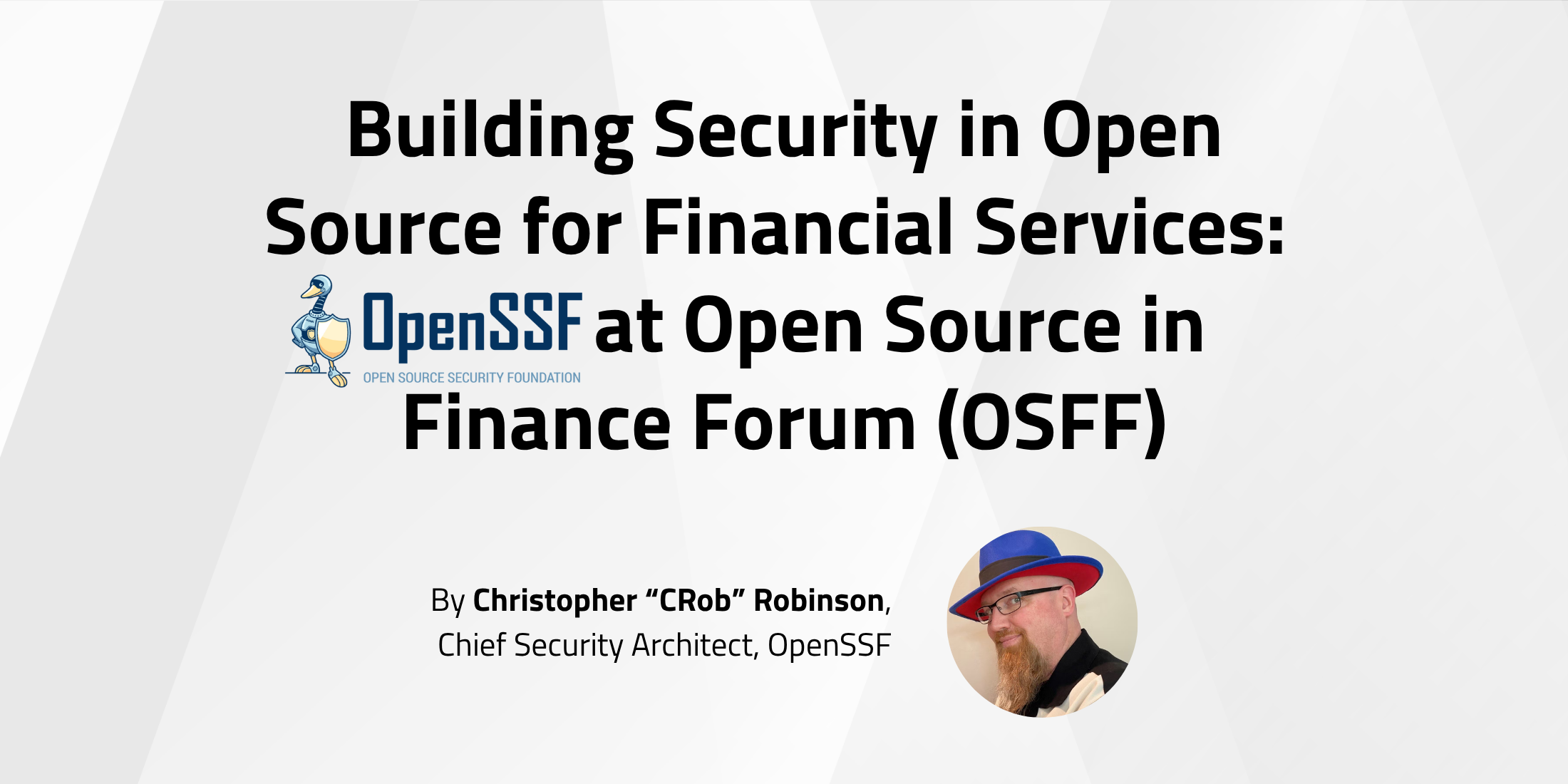
✅ OSS security best practices for finance from OSFF NYC
✅ New OpenSSF members, awards, and project milestones
✅ New podcast episodes (#44-45): OSPS Security Baseline and SBOM Chaos and Software Sovereignty
✅ SBOM Coffee Club reviewed OWASP AIBOM
✅ Zarf v0.65.1 adds broader K8s support & hosts Tech talk
✅ OpenBao advancing read-replication
✅ Upcoming events: FOSDEM (31 Jan & 1 Feb 2026), Open Source SecurityCon (23 March 2026), KubeCon+CloudNativeCon Europe (23-26, March 2026)
OpenSSF and Linux Foundation Education are committed to making world-class security training accessible to everyone. Whether you are securing critical open source projects, preparing for new regulations, or building foundational expertise, you can start today with free e-learning courses and earn digital badges along the way. Explore offerings like Developing Secure Software (LFD121), Security for Software Development Managers (LFD125), Understanding the EU Cyber Resilience Act (LFEL1001), Secure AI/ML-Driven Software Development (LFEL1012), and many others designed to strengthen software resilience across the ecosystem.
If you are ready to go deeper, Cyber Week kicks off December 1. This brings the biggest savings of the year from Linux Foundation Education. From certification bundles to instructor-led courses and subscription packages, you can save up to 65 percent and accelerate your career heading into 2026.
Visit LF Education starting on December 1st to grab the best savings of the year!
Start learning for free. Level up for less. Strengthen the security of the open source world.
At the end of October, Linux Foundation Europe, OpenSSF, and CEPS hosted a week of open source security activities across Ghent and Brussels. Developers, maintainers, policymakers, and security experts came together to break down the Cyber Resilience Act, share practical readiness guidance, and align on how Europe can strengthen software security without slowing open collaboration. From technical workshops to policy-driven discussions, the week highlighted both the challenges ahead and the growing support available to the community. Read the full recap for key takeaways, reflections, and ways to get involved.
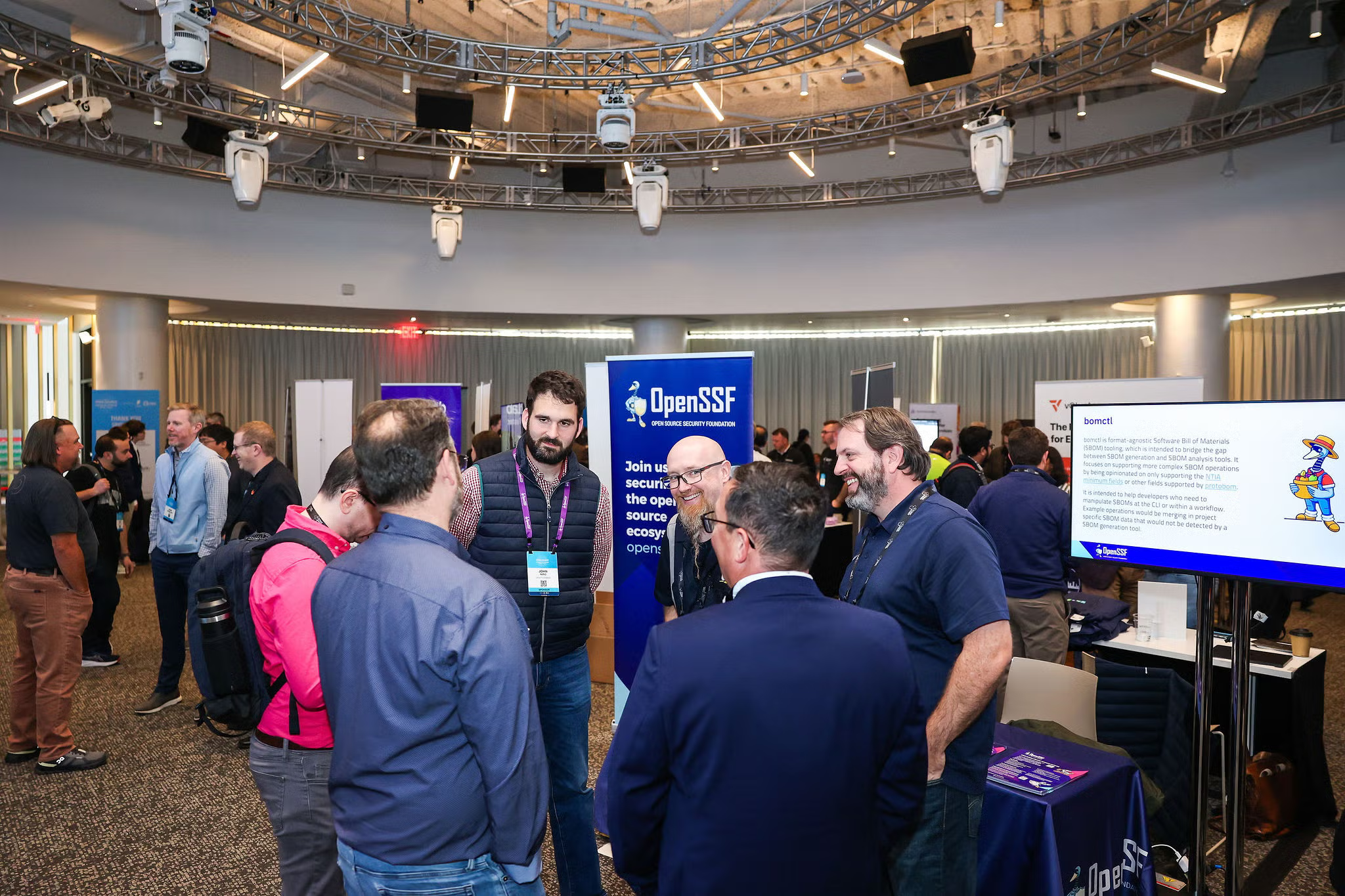
OpenSSF joined the Open Source in Finance Forum (OSFF) NYC to highlight how financial institutions can confidently rely on open source while managing real security risks. Through sessions on AI security, project security baselines, and stabilizing vulnerability data pipelines, OpenSSF showed how collaboration between maintainers, regulators, and industry engineers leads to practical solutions that strengthen the software powering today’s financial systems. Read the full recap to explore the key takeaways and resources shared at OSFF.
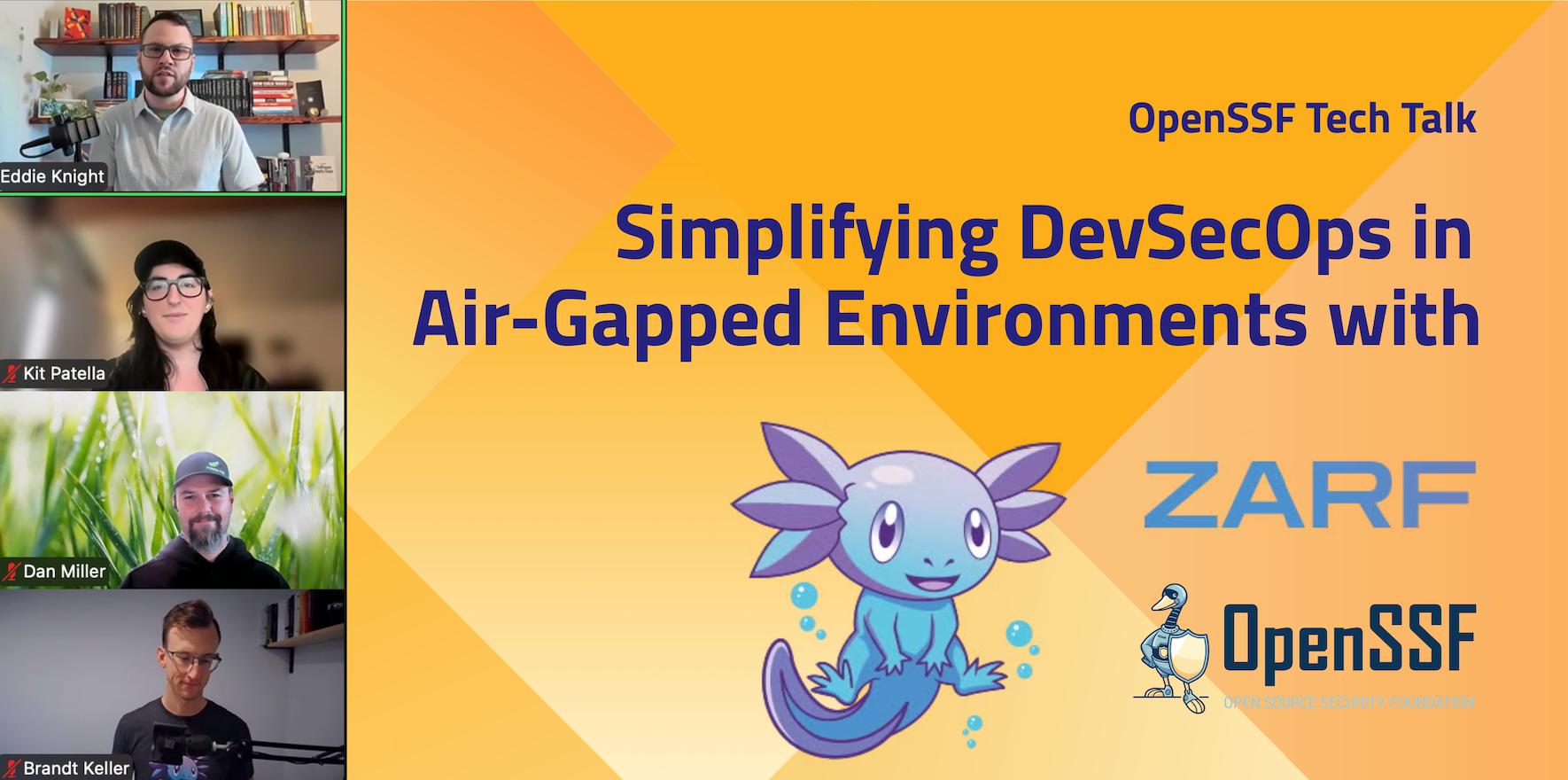
In the latest OpenSSF Tech Talk, we focused on a significant hurdle in software supply chain security: managing software delivery and upkeep within air-gapped and restricted network environments. You can now view the recording on the OpenSSF YouTube channel, and the presentation slides are accessible here.
The Open Source Security Foundation (OpenSSF) announced new and expanded memberships at Open Source SecurityCon North America, welcoming Target Corporation and Thread AI, and celebrating OSTIF’s upgrade to general member status. The community also recognized standout contributors with the latest Golden Egg Awards and highlighted recent progress across learning resources, tooling, and global events. Read the blog to learn more about the membership updates, award winners, and milestones from the past quarter.
Here you will find a snapshot of what’s new on the OpenSSF blog. For more stories, ideas, and updates, visit the blog section on our website.
#44 – S2E21 A Deep Dive into the Open Source Project Security (OSPS) Baseline
In this episode of What’s in the SOSS? CRob, Ben Cotton, and Eddie Knight take a practical look at the Open Source Project Security (OSPS) Baseline, a shared security checklist designed to help maintainers communicate the current state of their project’s security practices. They break down how the baseline fits into real workflows, why clear documentation builds trust, and how downstream users benefit when expectations are aligned. The conversation also explores integrations with other OpenSSF efforts, lessons from the GUAC case study, and what’s ahead as the community continues to refine the framework and expand tooling support.
#45 – S2E22 SBOM Chaos and Software Sovereignty with Canonical’s Stephanie Domas
In this episode of What’s in the SOSS, CRob talks with Stephanie Domas, Chief Security Officer at Canonical, about the hidden challenges shaping today’s open source ecosystem. Stephanie breaks down why third party patches disrupt SBOM accuracy, how software sovereignty is influencing global procurement, and what the EU CRA means for enterprises working with upstream dependencies. She also shares insights on memory safe upgrades in Ubuntu’s next LTS and why transparency, collaboration, and community support are critical to building trust in open source.
Connect with the OpenSSF Community at these key events:
There are a number of ways for individuals and organizations to participate in OpenSSF. Learn more here.
You’re invited to…
We want to get you the information you most want to see in your inbox. Missed our previous newsletters? Read here!
Have ideas or suggestions for next month’s newsletter about the OpenSSF? Let us know at marketing@openssf.org, and see you next month!
Regards,
The OpenSSF Team
Welcome to the September 2025 edition of the OpenSSF Newsletter! Here’s a roundup of the latest developments, key events, and upcoming opportunities in the Open Source Security community.
🎉 Big week in Amsterdam: Recap of OpenSSF at OSSummit + OpenSSF Community Day Europe.
🥚 Golden Egg Awards shine on five amazing community leaders.
✨ Fresh resources: AI Code Assistant tips and SBOM whitepaper.
🤝 Trustify + GUAC = stronger supply chain security.
🌍 OpenSSF Community Day India: 230+ open source enthusiasts packed the room.
🎙 New podcasts: AI/ML security + post-quantum race.
🎓 Free courses to level up your security skills.
📅 Mark your calendar and join us for Community Events.
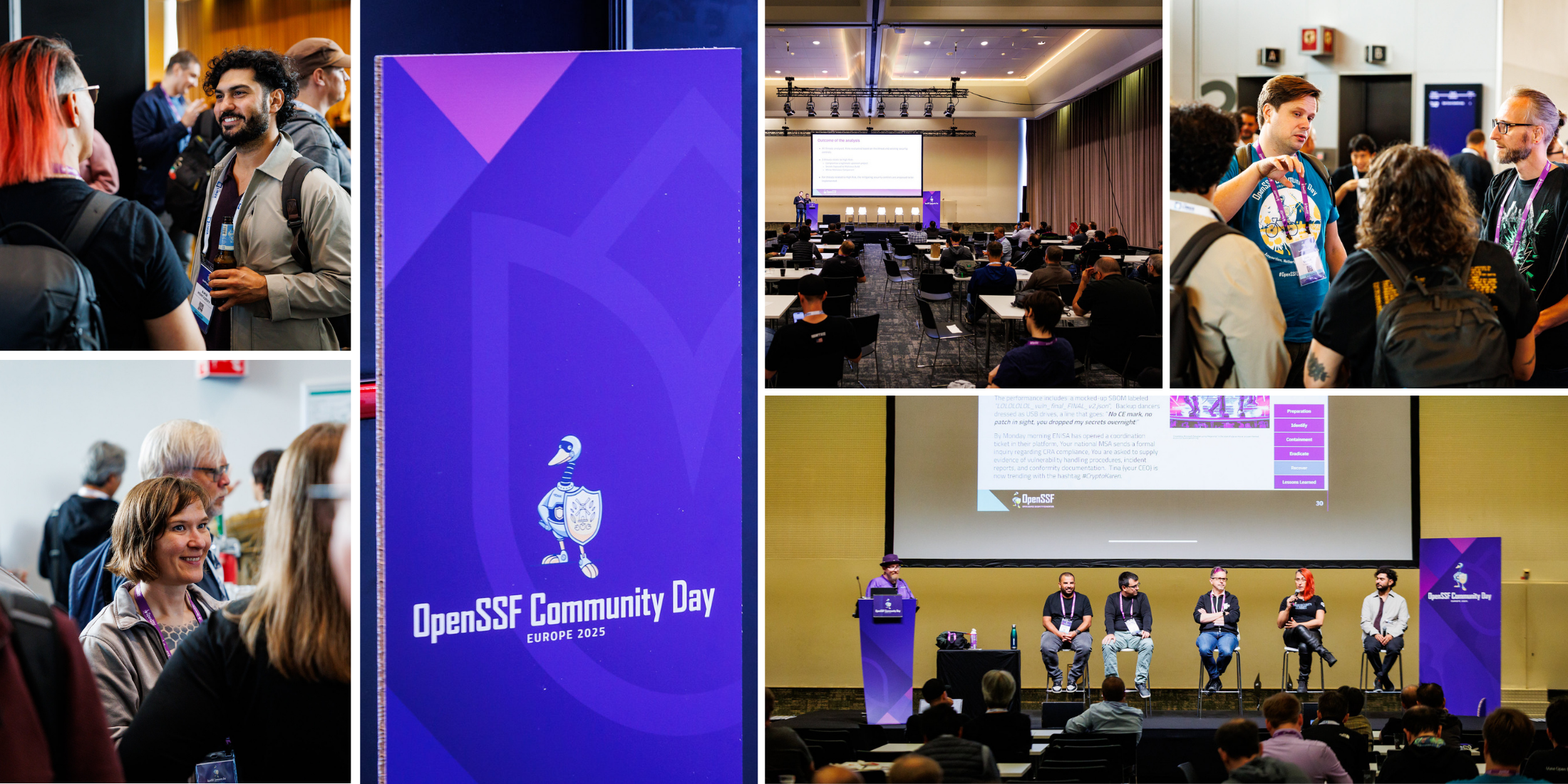
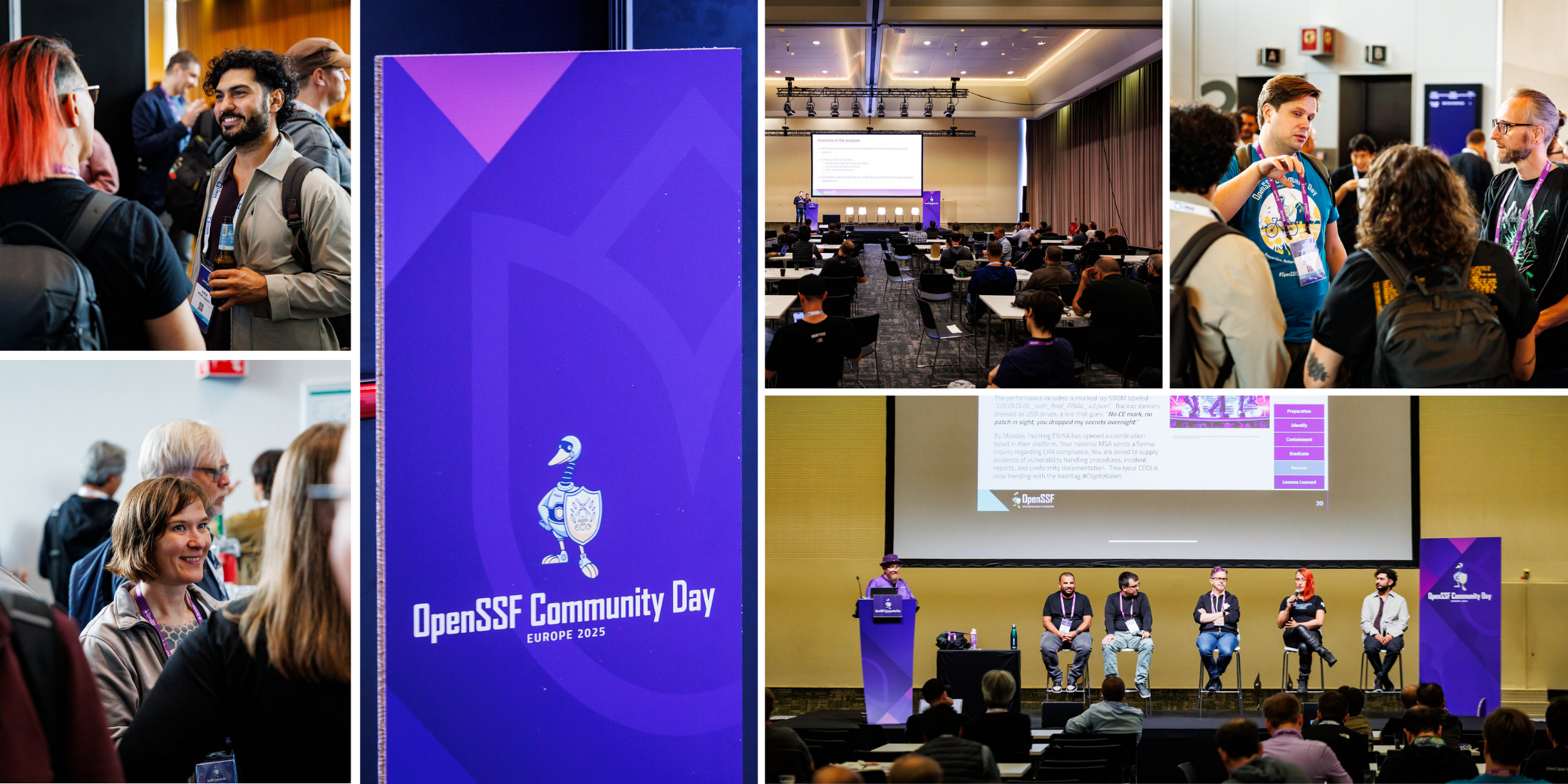 From August 25–28, 2025, the Linux Foundation hosted Open Source Summit Europe and OpenSSF Community Day Europe in Amsterdam, bringing together developers, maintainers, researchers, and policymakers to strengthen software supply chain security and align on global regulations like the EU Cyber Resilience Act (CRA). The week included strong engagement at the OpenSSF booth and sessions on compliance, transparency, proactive security, SBOM accuracy, and CRA readiness.
OpenSSF Community Day Europe celebrated milestones in AI security, public sector engagement, and the launch of Model Signing v1.0, while also honoring five community leaders with the Golden Egg Awards. Attendees explored topics ranging from GUAC+Trustify integration and post-quantum readiness to securing GitHub Actions, with an interactive Tabletop Exercise simulating a real-world incident response.
These gatherings highlighted the community’s progress and ongoing commitment to strengthening open source security. Read more.
At OpenSSF Community Day Europe, the Open Source Security Foundation honored this year’s Golden Egg Award recipients. Congratulations to Ben Cotton (Kusari), Kairo de Araujo (Eclipse Foundation), Katherine Druckman (Independent), Eddie Knight (Sonatype), and Georg Kunz (Ericsson) for their inspiring contributions.
With exceptional community engagement across continents and strategic efforts to secure the AI/ML pipeline, OpenSSF continues to build trust in open source at every level.
Read the full press release to explore the achievements, inspiring voices, and what’s next for global open source security.
Here you will find a snapshot of what’s new on the OpenSSF blog. For more stories, ideas, and updates, visit the blog section on our website.
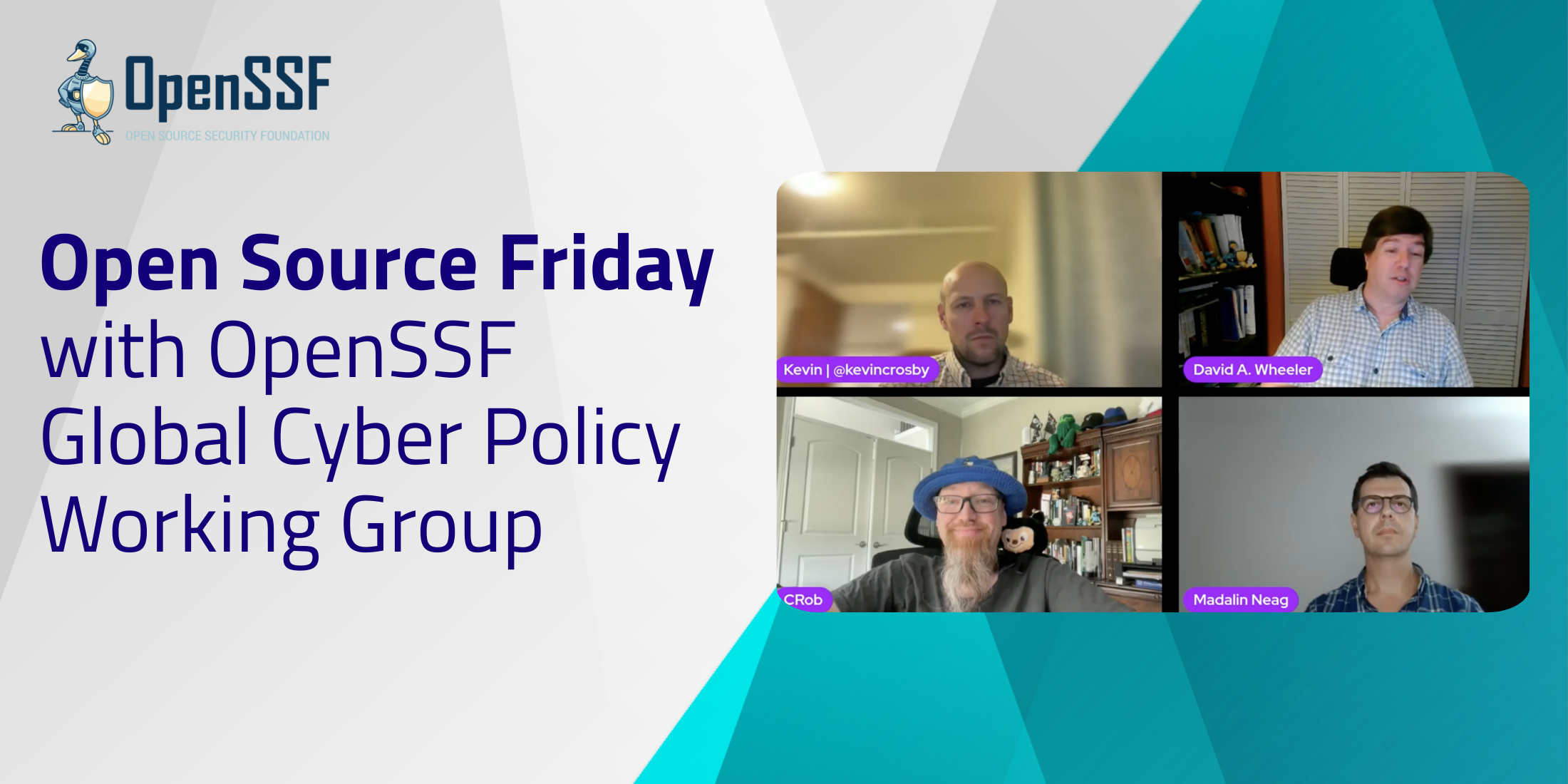 On August 15, 2025, GitHub’s Open Source Friday series spotlighted the OpenSSF Global Cyber Policy Working Group (WG) and the OSPS Baseline in a live session hosted by Kevin Crosby, GitHub. The panel featured OpenSSF’s Madalin Neag (EU Policy Advisor), Christopher Robinson (CRob) (Chief Security Architect) and David A. Wheeler (Director of Open Source Supply Chain Security) who discussed how the Working Group helps developers, maintainers, and policymakers navigate global cybersecurity regulations like the EU Cyber Resilience Act (CRA).
The conversation highlighted why the WG was created, how global policies affect open source, and the resources available to the community, including free training courses, the CRA Brief Guide, and the Security Baseline Framework. Panelists emphasized challenges such as awareness gaps, fragmented policies, and closed standards, while underscoring opportunities for collaboration, education, and open tooling.
As the CRA shapes global standards, the Working Group continues to track regulations, engage policymakers, and provide practical support to ensure the open source community is prepared for evolving cybersecurity requirements. Learn more and watch the recording.
SBOMs are becoming part of everyday software practice, but many teams still ask the same question: how do we turn SBOM data into decisions we can trust?
Our new whitepaper, “Improving Risk Management Decisions with SBOM Data,” answers that by tying SBOM information to concrete risk-management outcomes across engineering, security, legal, and operations. It shows how to align SBOM work with real business motivations like resiliency, release confidence, and compliance. It also describes what “decision-ready” SBOMs look like, and how to judge data quality. To learn more, download the Whitepaper.
 GUAC and Trustify are combining under the GUAC umbrella to tackle the challenges of consuming, processing, and utilizing supply chain security metadata at scale. With Red Hat’s contribution of Trustify, the unified community will serve as the central hub within OpenSSF for building and using supply chain knowledge graphs, defining standards, developing shared infrastructure, and fostering collaboration. Read more.
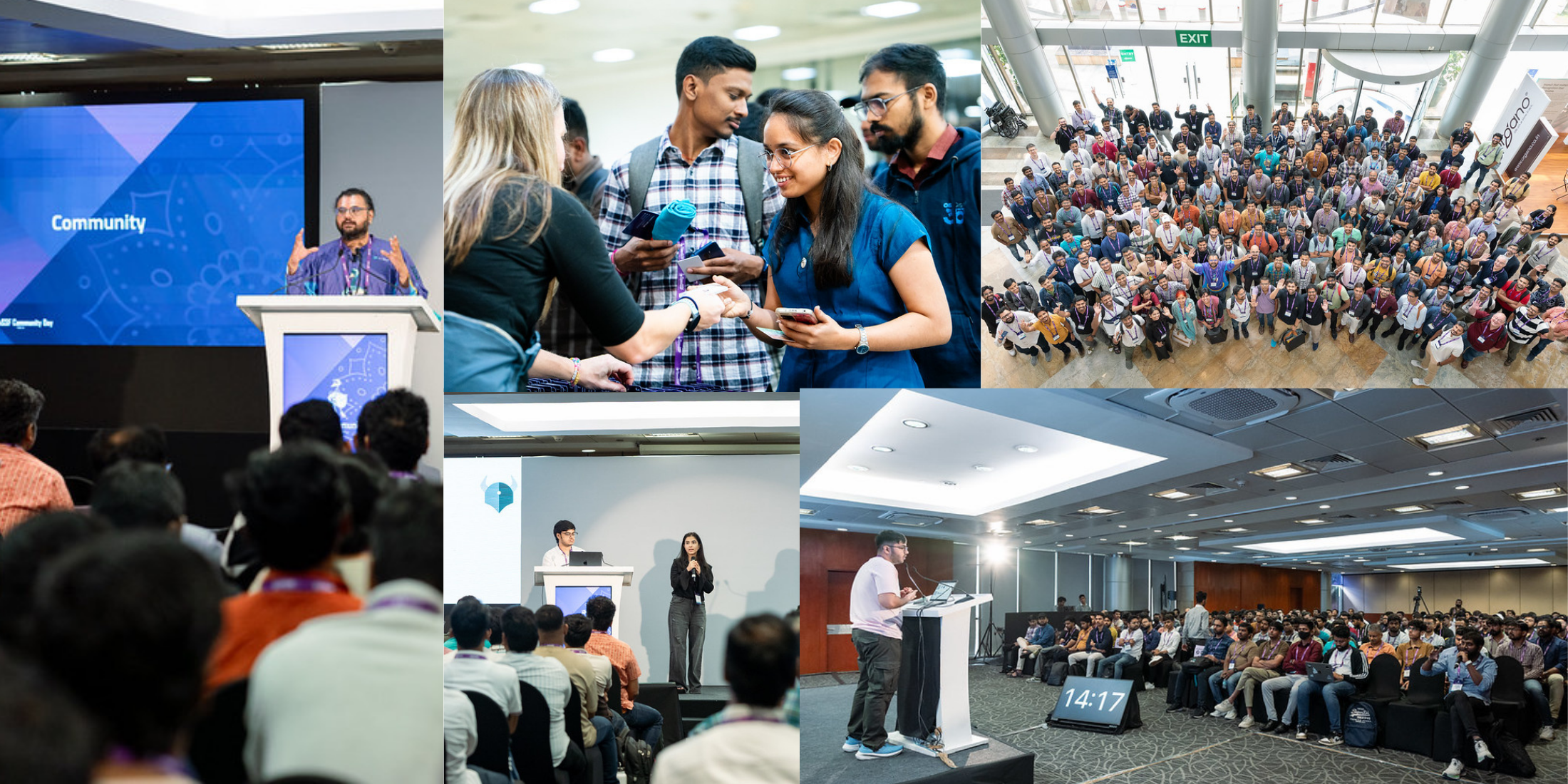 On August 4, 2025, OpenSSF hosted its second Community Day India in Hyderabad, co-located with KubeCon India. With 232 registrants and standing-room-only attendance, the event brought together open source enthusiasts, security experts, engineers, and students for a full day of learning, collaboration, and networking.
The event featured opening remarks from Ram Iyengar (OpenSSF Community Engagement Lead, India), followed by technical talks on container runtimes, AI-driven coding risks, post-quantum cryptography, supply chain security, SBOM compliance, and kernel-level enforcement. Sessions also highlighted tools for policy automation, malicious package detection, and vulnerability triage, as well as emerging approaches like chaos engineering and UEFI secure boot.
The event highlighted India’s growing role in global open source development and the importance of engaging local communities to address global security challenges. Read more.
In our recent blog, Avishay Balter, Principal SWE Lead at Microsoft and David A. Wheeler, Director, Open Source Supply Chain Security at OpenSSF introduce the OpenSSF “Security-Focused Guide for AI Code Assistant Instructions.” AI code assistants can speed development but also generate insecure or incorrect results if prompts are poorly written. The guide, created by the OpenSSF Best Practices and AI/ML Working Groups with contributors from Microsoft, Google, and Red Hat, shows how clear and security-focused instructions improve outcomes. It stands as a practical resource for developers today, while OpenSSF also develops a broader course (LFEL1012) on using AI code assistants securely.
This effort marks a step toward ensuring AI helps improve security instead of undermining it. Read more.
 Public package registries and other shared services power modern software at global scale, but most costs are carried by a few stewards while commercial-scale users often contribute little. Our new open letter calls for practical models that align usage with responsibility — through partnerships, tiered access, and value-add options — so these systems remain strong, secure, and open to all.
Signed by: OpenSSF, Alpha-Omega, Eclipse Foundation (Open VSX), OpenJS Foundation, Packagist (Composer), Python Software Foundation (PyPI), Rust Foundation (crates.io), Sonatype (Maven Central).
#38 – S2E15 Securing AI: A Conversation with Sarah Evans on OpenSSF’s AI/ML Initiatives
In this episode of What’s in the SOSS, Sarah Evans, Distinguished Engineer at Dell Technologies, discusses extending secure software practices to AI. She highlights the AI Model Signing project, the MLSecOps whitepaper with Ericsson, and efforts to identify new personas in AI/ML operations. Tune in to hear how OpenSSF is shaping the future of AI security.
#39 – S2E16 Racing Against Quantum: The Urgent Migration to Post-Quantum Cryptography with KeyFactor’s Crypto Experts
In this episode of What’s in the SOSS, host Yesenia talks with David Hook and Tomas Gustavsson from Keyfactor about the race to post-quantum cryptography. They explain quantum-safe algorithms, the importance of crypto agility, and why sectors like finance and supply chains are leading the way. Tune in to learn the real costs of migration and why organizations must start preparing now before it’s too late.
The Open Source Security Foundation (OpenSSF), together with Linux Foundation Education, provides a selection of free e-learning courses to help the open source community build stronger software security expertise. Learners can earn digital badges by completing offerings such as:
These are just a few of the many courses available for developers, managers, and decision-makers aiming to integrate security throughout the software development lifecycle.
Join us at OpenSSF Community Day in South Korea!
OpenSSF Community Days bring together security and open source experts to drive innovation in software security.
Connect with the OpenSSF Community at these key events:
There are a number of ways for individuals and organizations to participate in OpenSSF. Learn more here.
You’re invited to…
We want to get you the information you most want to see in your inbox. Missed our previous newsletters? Read here!
Have ideas or suggestions for next month’s newsletter about the OpenSSF? Let us know at marketing@openssf.org, and see you next month!
Regards,
The OpenSSF Team